 Determination of Bias in Zdr
S-Pol TRMM-LBA, Brazil 1999
Importance of Bias Determination
Differential Reflectivity (Zdr) is a residual of two large quantities
of limited absolute accuracy. The accuracies of the larger
quantitiies (the H and V polarized system-derived reflectivities) is a
function of system calibration and signal statistics. If the H and V
reflectivity calibrations are stable, there is likely to be a bias in
Zdr due to the inaccuracies of those reflectivity calibrations; under
such circumstances, it is possible to apply a bias correction to Zdr,
even if there is a relatively large uncertainty in the calibration of
the H and V subsystems.
Note that high accuracy in Zdr is desired when Zdr is applied to
precipitation accumulation estimates. For precipitation estimates, a
change of 0.3 dB in Zdr will result in a 17% change in estimated
accumulation.
Since S-Pol is a research radar system, particular attention is
given to ensuring the accuracy of all parameters. Every effort is
made to minimize the error in Zdr, with the goal of obtaining
accuracies of .2 dB, or better.
For TRMM-LBA, analysis indicates that no bias correction needed to be
applied to raw S-Pol Zdr values. Evaluation of Zdr bias indicates
that Zdr of the the raw data is accurate to +/- .05 dB
Technique
To estimate Zdr bias, we require a well-characterized, non-biased,
system-independent data set for analysis. Such a data set can be
obtained from viewing rainfall at vertical incidence.
For purposes of Zdr bias estimation, there is no consistent axial
asymmetry in raindrop shape when viewed from directly below. In the
case of a strongly sheared environment, there might arguably be
preferential orientation of a collection of hydrometeors.
Fortunately, preferential orientation effects can be reliably removed
by rotating the vertically pointing antenna in azimuth and averaging
results over several rotations. It may also be surmised that ice
crystals can serve for bias determination; experience with frozen
hydrometeors shows that this is indeed the case, but that there is
somewhat greater variablility in results (larger standard deviation in
the Zdr spectrum, and somewhat greater variability introduced into the
inter-case mean).
Antenna rotation is important for a second reason: neutralization
of side-lobe effects. The antenna 90-degree side lobes can show a
significant bias in Zdr when the antenna is pointed vertically. This
bias is typically evident at a certain azimuth, and typically shows a
repetition pattern with a 45 or 90 degree azimuthal periodicity
(periodicity is dependent upon feedhorn strut location, as evidenced
in the radar's antenna pattern). Under the best circumstances,
rotation of the antenna, combined with sufficient averaging time
(i.e., number of rotations), cancels out bias due to clutter. (For
documentation of S-Pol 90° sidelobes, see
S-Pol Sidelobe Artifacts)
Practical Considerations
During any S-Pol field project, radar operators and scientists must be
aware of the high priority assigned to collecting appropriate vertical
pointing data sets. A case is considered appropriate if it meets the
following (subjective) criteria:
- light precipitation at the radar
- precipitation-sized hydrometeors extend vertically for 5 to 10 kilometers
- radar dish not too wet from previous precipitation
- signal power return is not too great
During data collection, the radar is operated in the following way:
- data collection period of 2 minutes or greater
- antenna is slowly rotated while looking vertically
- clutter filter is OFF (although clutter filter effects are generally
acceptably small)
Every attempt is made to process appropriate cases in a very
consistent way. Vertical-pointing scans are transferred to a data
processing system. A script is used to drive the SOLO analysis
package, performing parameter thresholding and general data selection,
on through production of a histogram of Zdr values for qualifying
data. The only operator interaction is in the definition of a broad
boundary in order to time-window the data and to eliminate obvious
artifacts.
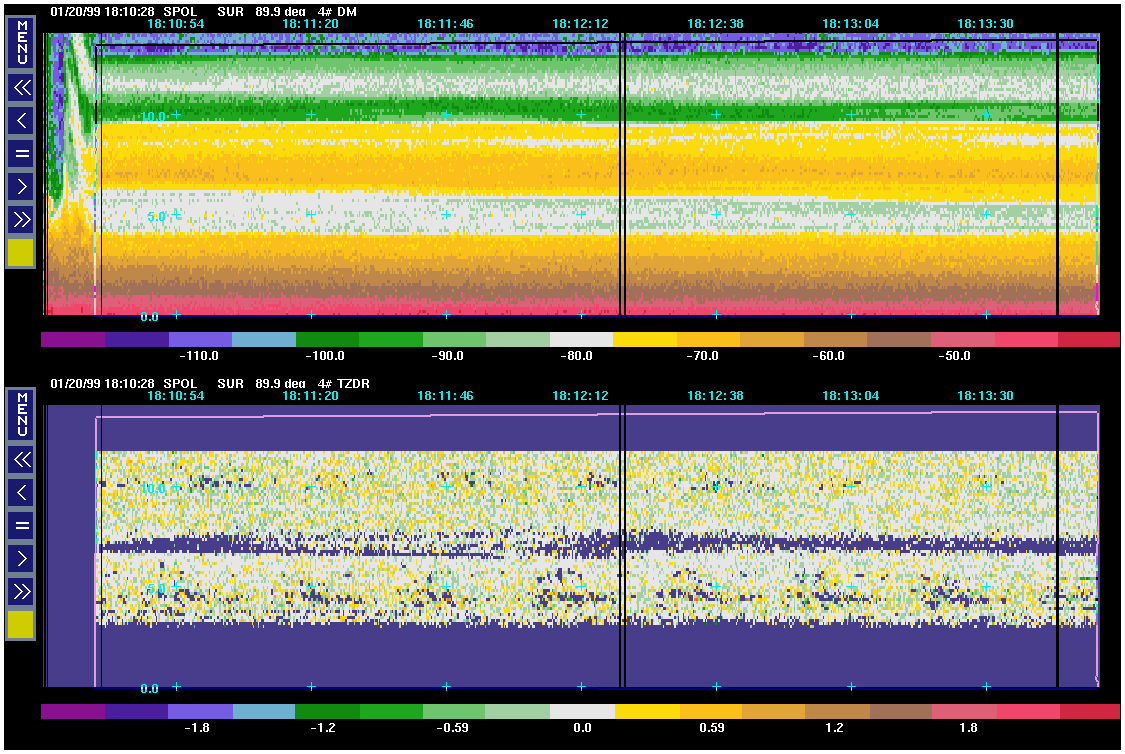
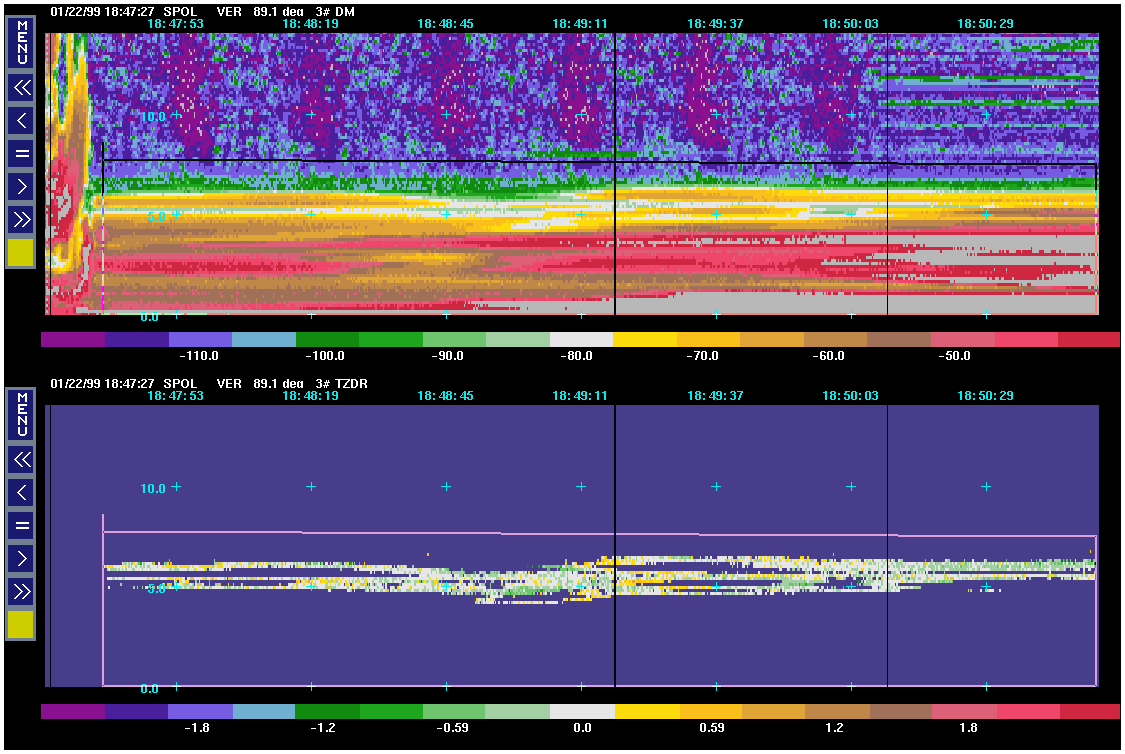
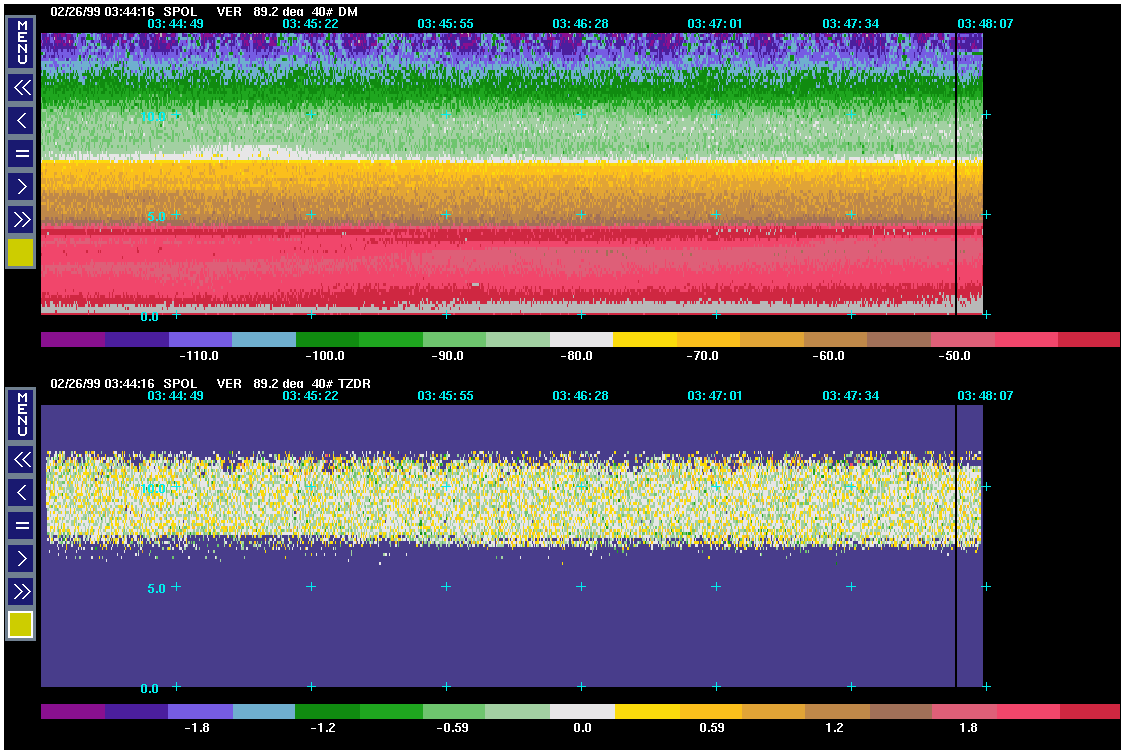
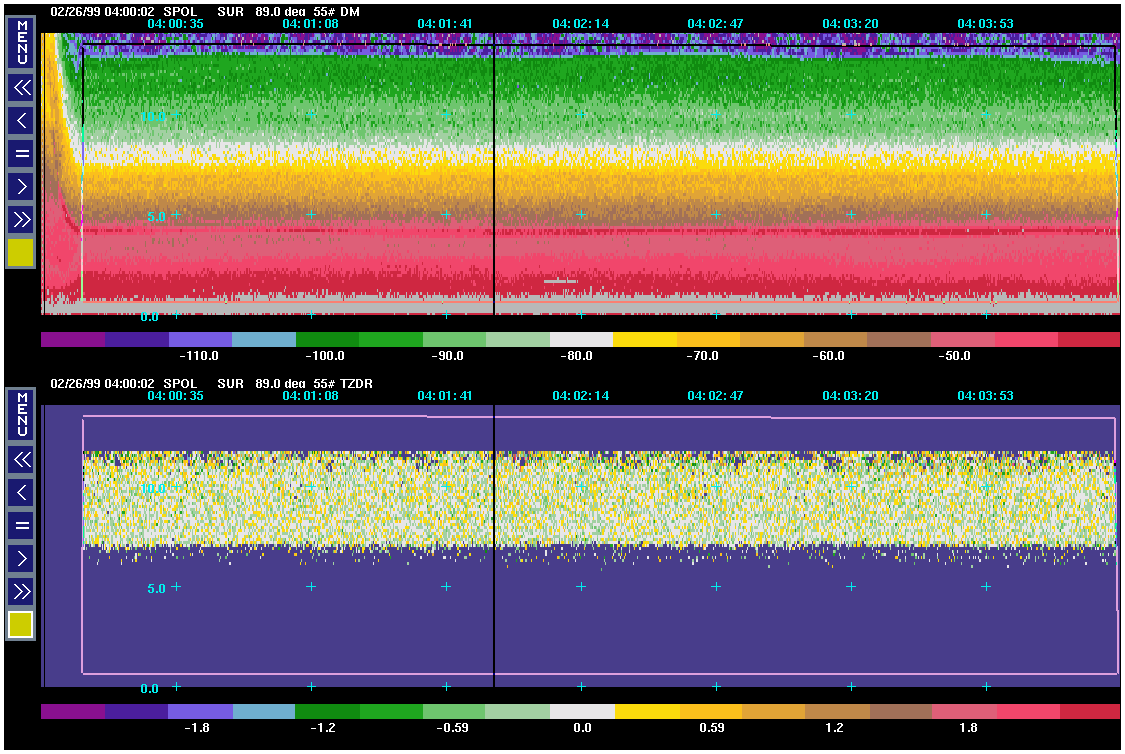
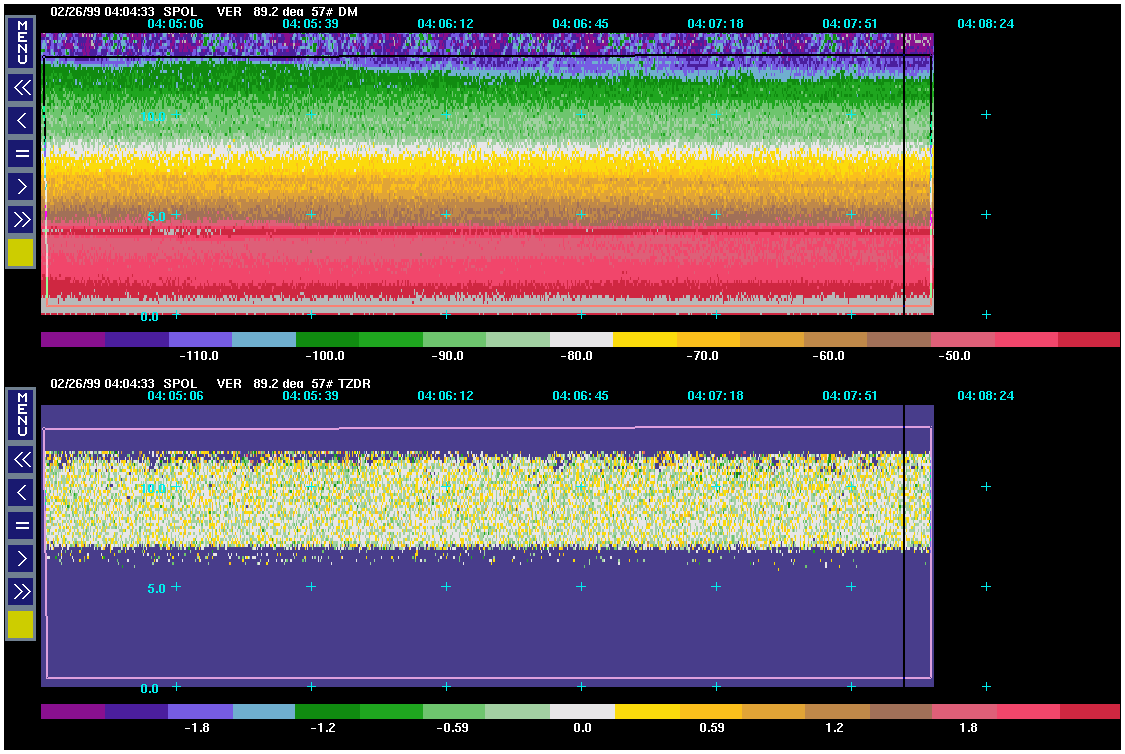
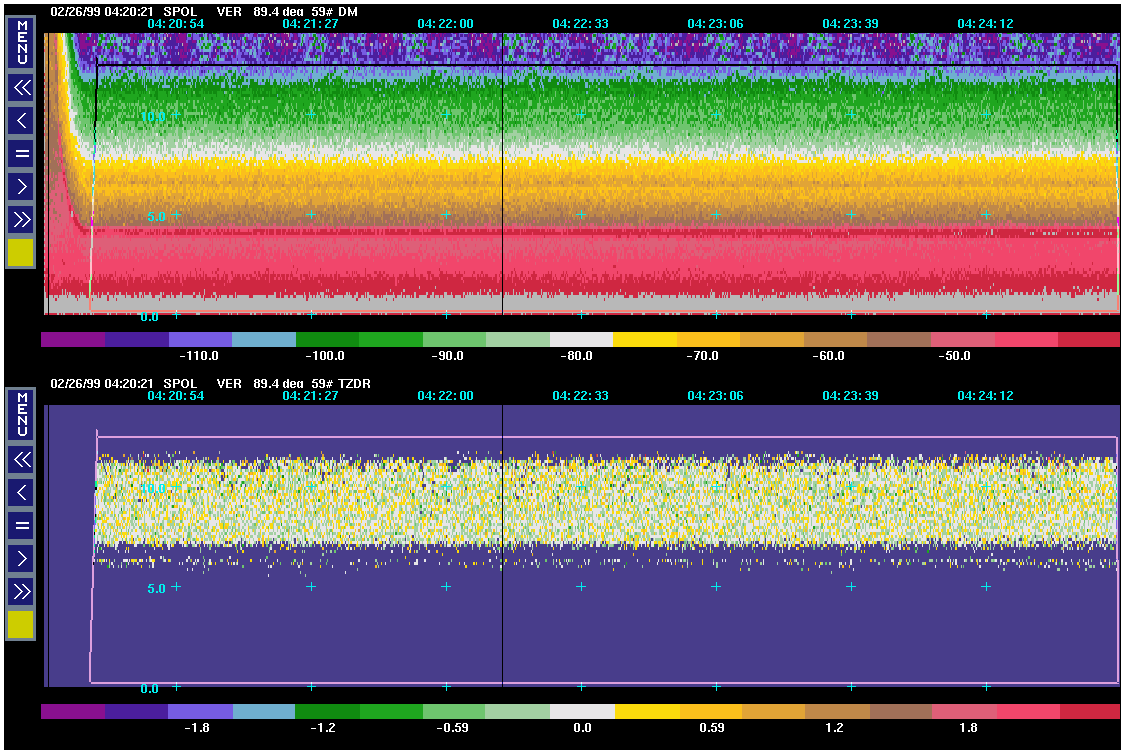
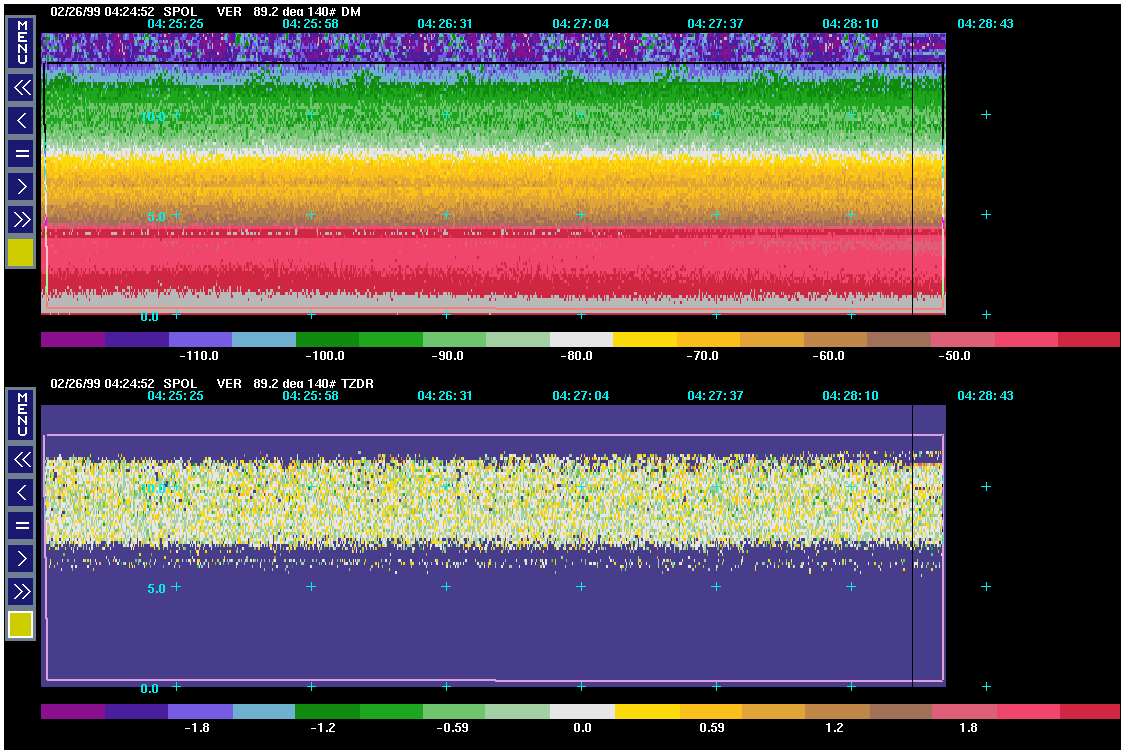
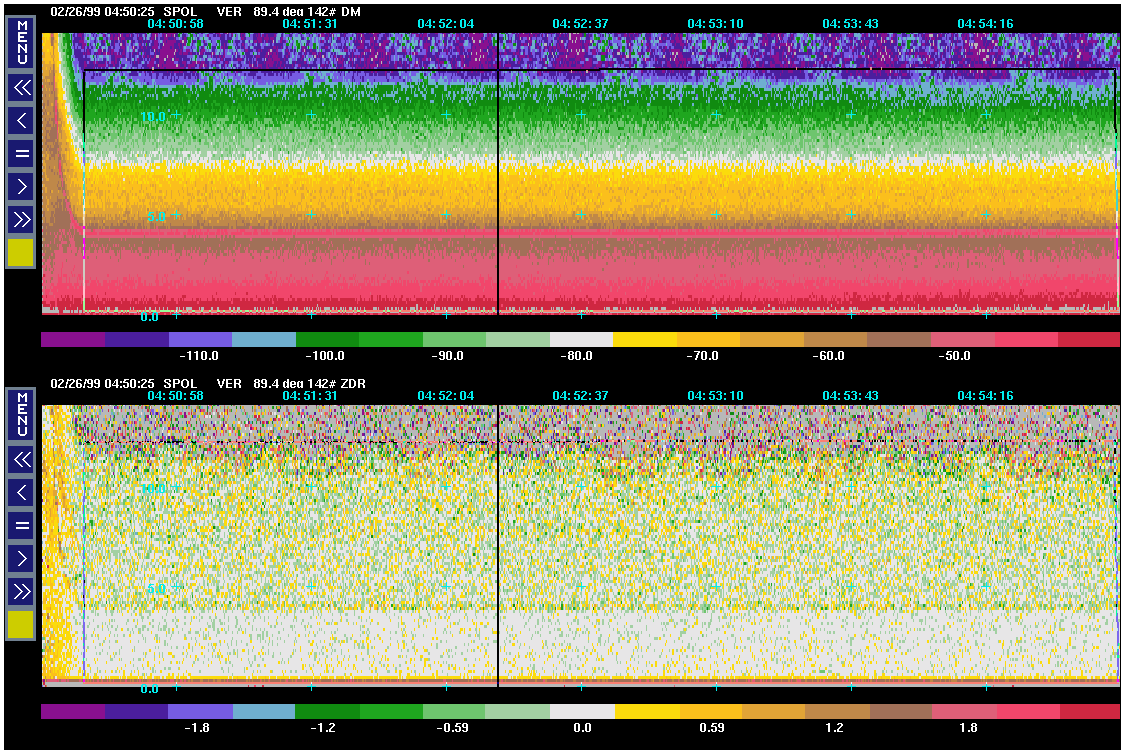
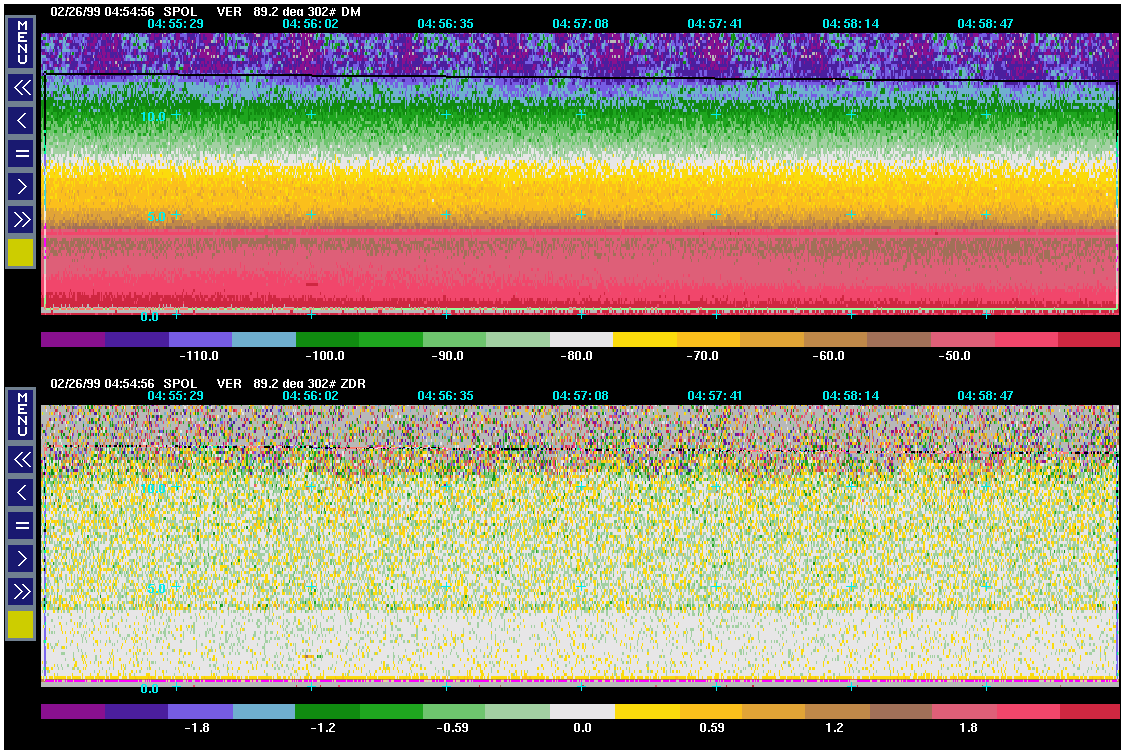
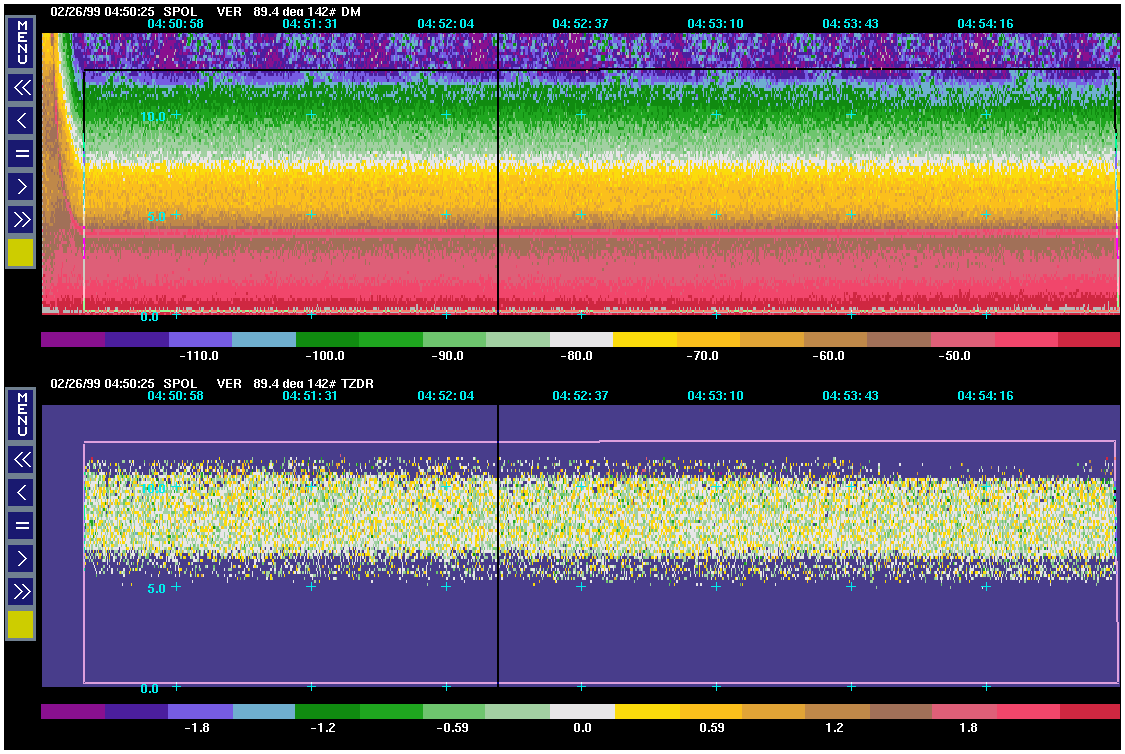
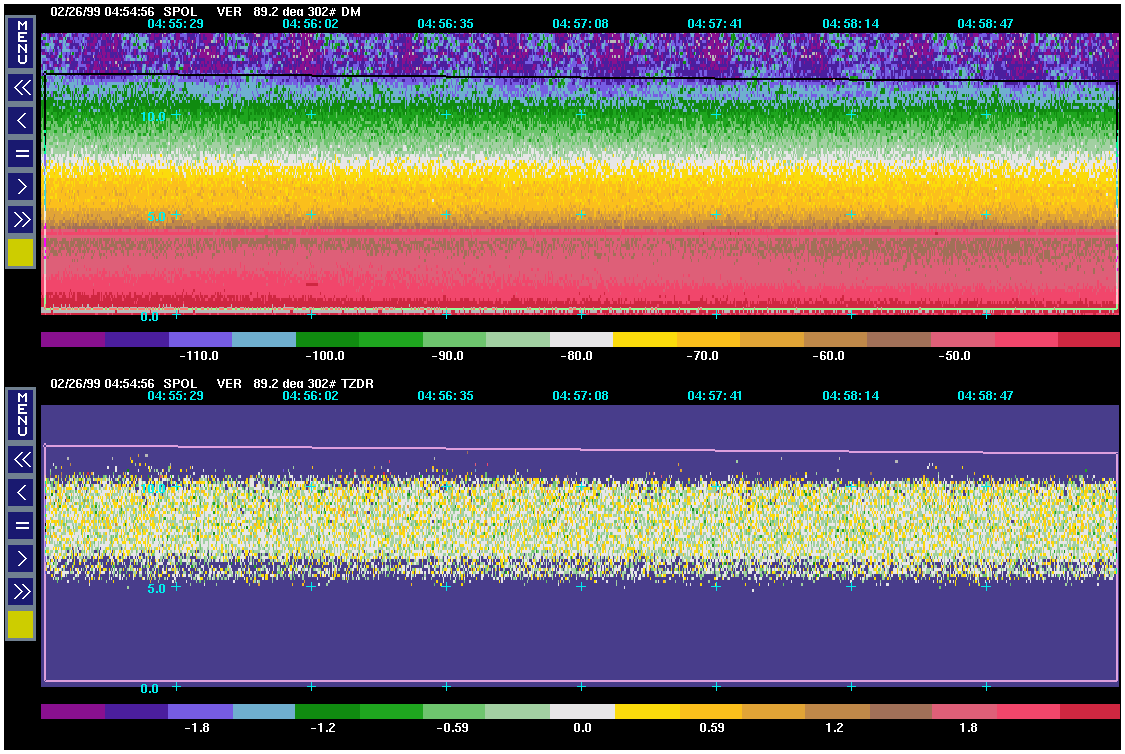
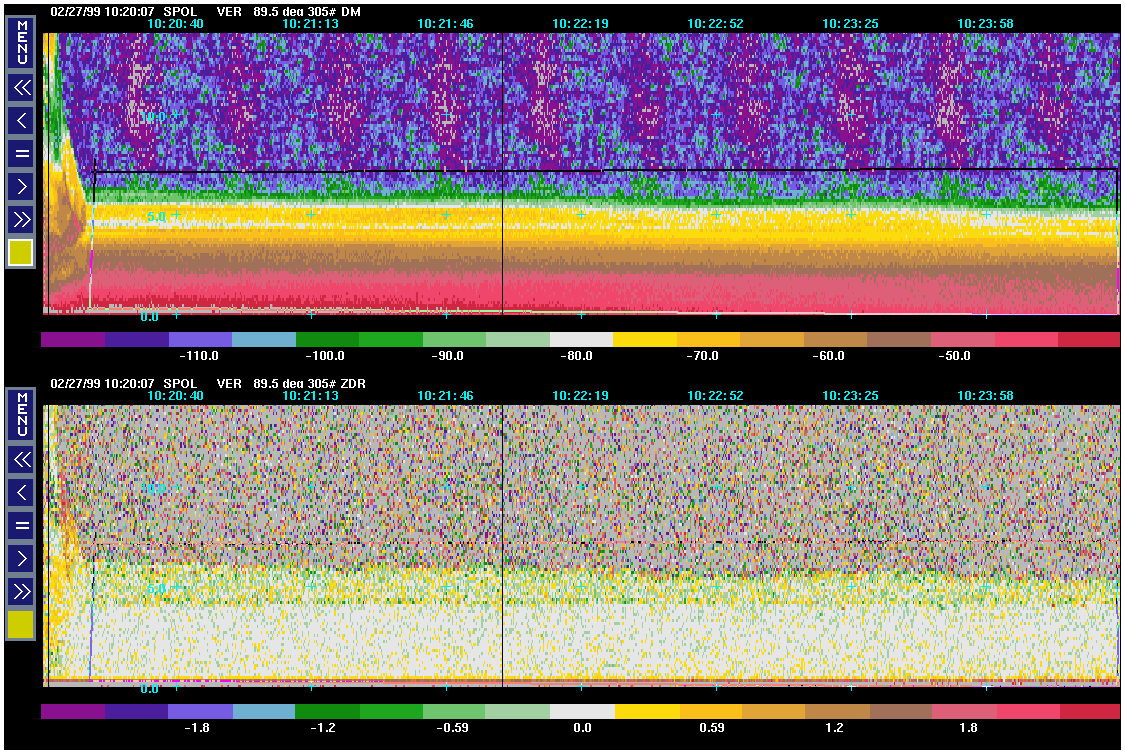
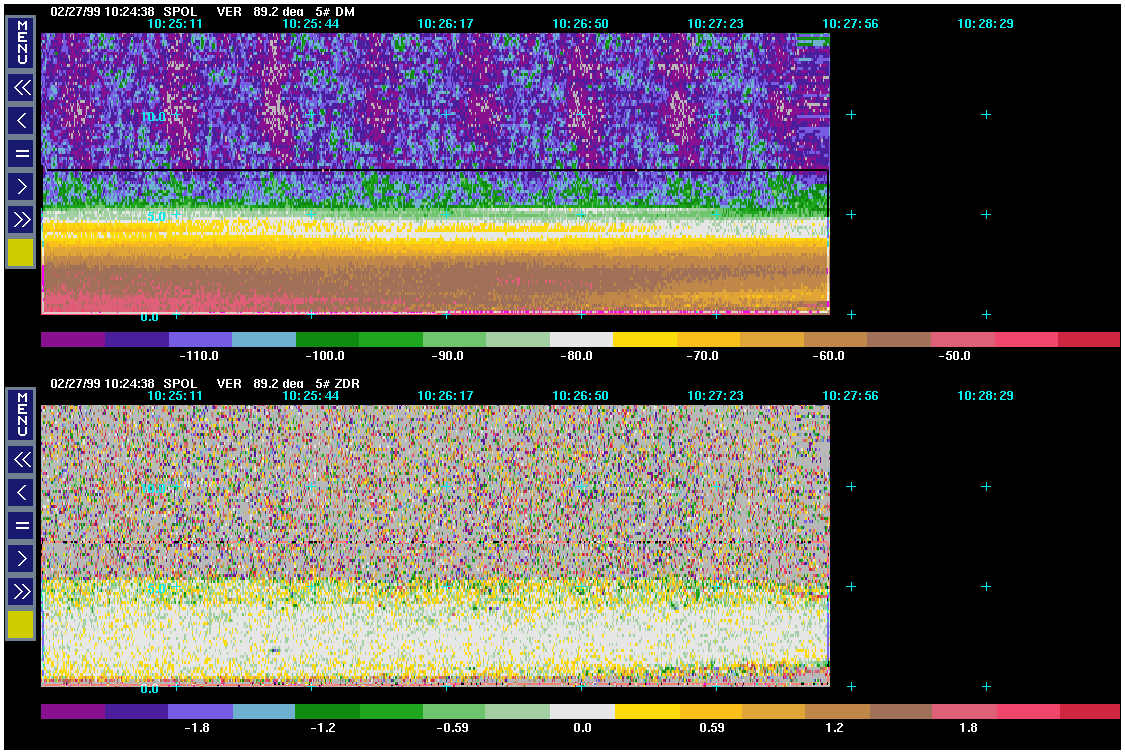
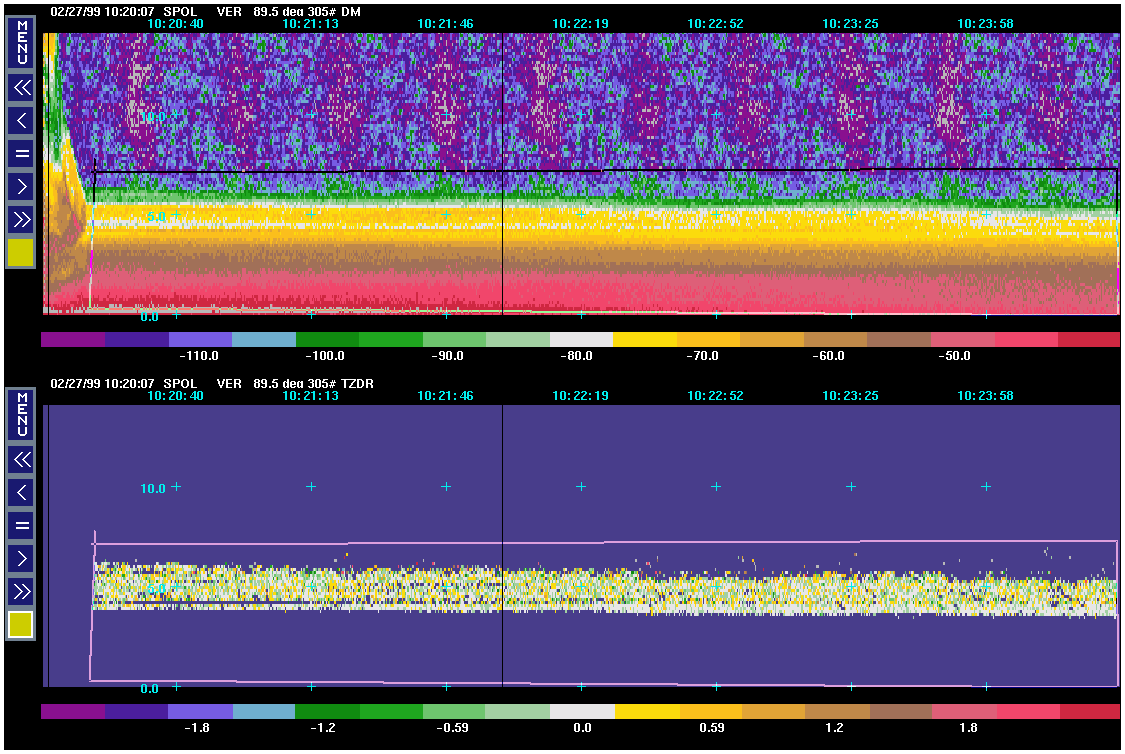
Table 1 summarizes the automatic thresholding criteria applied to
vertical pointing data. Note that original criteria used in the field
during TRMM-LBA were different from the criteria detailed in the
table. These modifications were made to bring procedure into
conformance with enhancements introduced during MAP (Sep/Oct 1999).
For TRMM-LBA, there is no substantive difference between early Zdr
bias estimates and current Zdr bias estimates.
In Table 1, if two conditions are shown for the same threshold
parameter, the more restrictive condition is used. In most cases,
when two conditions are listed, the second condition indicates
criteria that are specific to S-Pol, and may be adjusted for other
radars or other S-Pol projects.
TABLE 1. Vertical Pointing for Zdr Bias Determination: threshold criteria
| Description |
Exclusion Condition |
Reason |
| eliminate data when received power is too high |
DM > -45.0 dBm |
avoid regions of non-linear receiver response |
| DM > -70.0 dBm |
restrict data to upper portion of receiver response, as selected by S-Pol automatic gain control (AGC) |
| eliminate data in regions of weak signal |
DM < 100 dBm (flexible criteria) |
limit variablity due to poor signal statistics |
| eliminate bright band and regions of wet hydrometeors |
LDR > -13.0 dB |
Zdr can have a very wide distribution in these regions |
| avoid regions close to radar |
range < 1.2 km |
eliminates regions of TR tube recovery, and selects data in far-field, only |
| range < 3.0 km |
eliminates regions of differential TR tube recovery,
a special issue for the S-Pol receiver configuration |
| remove data above the atmosphere |
range > 14.0 km |
also eliminates inadvertant inclusion of S-Pol test pulse |
Analysis
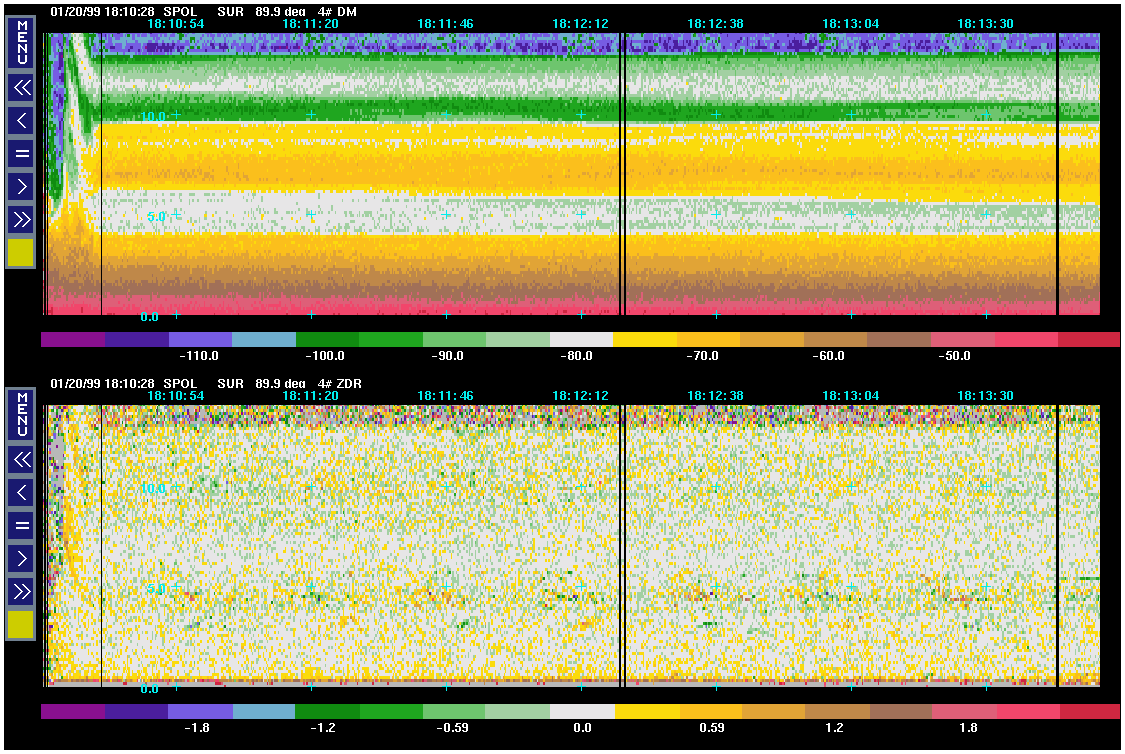
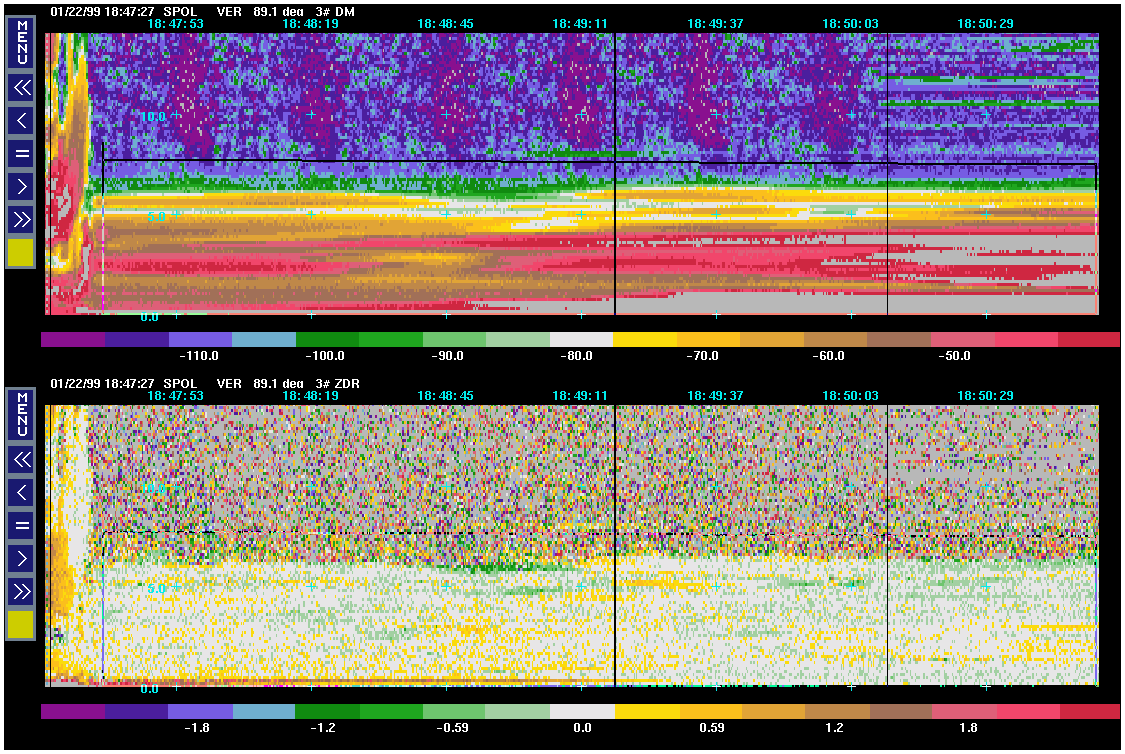
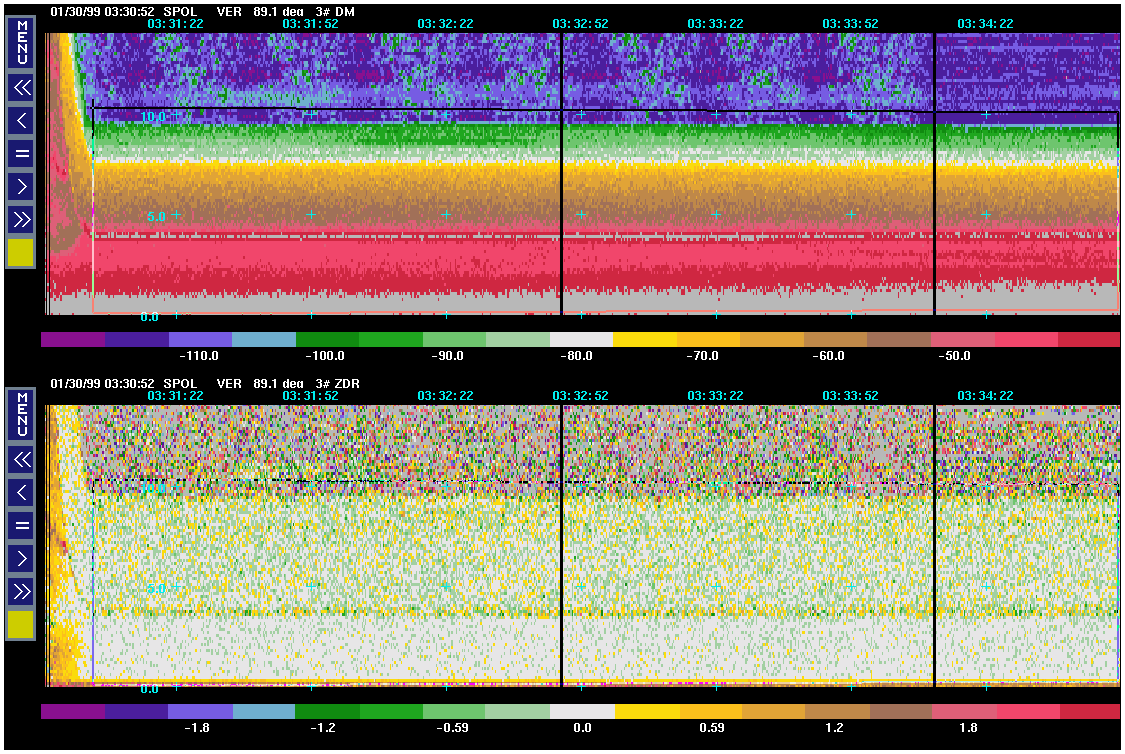
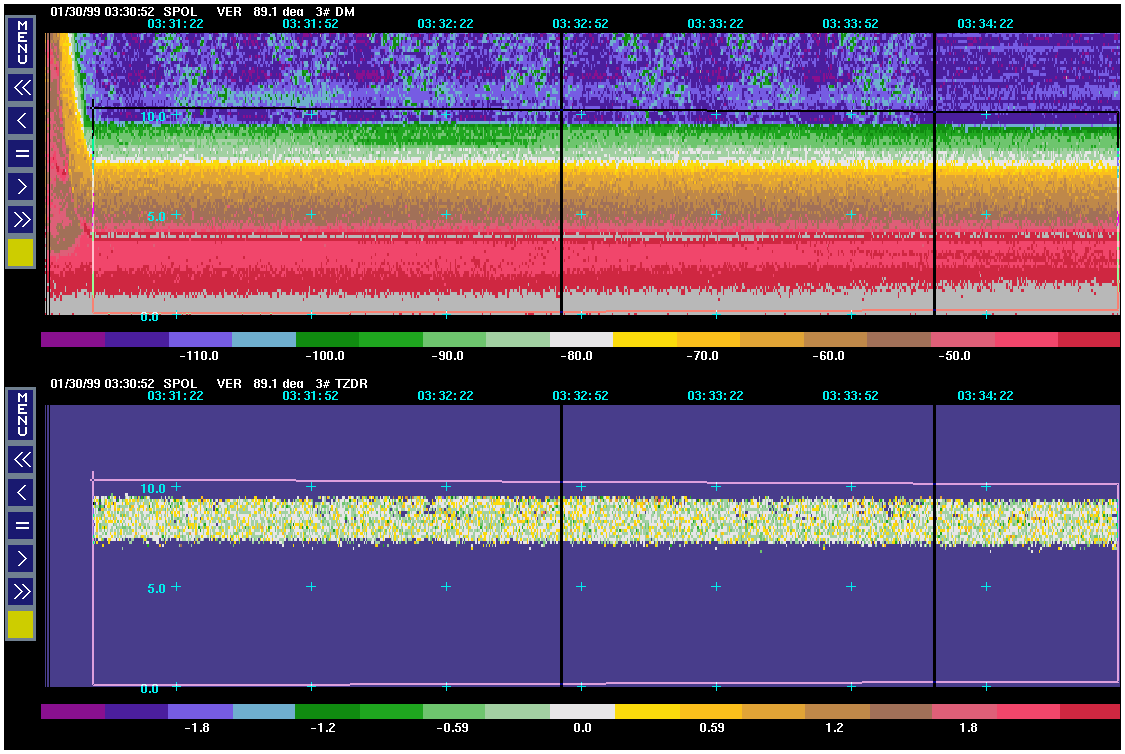
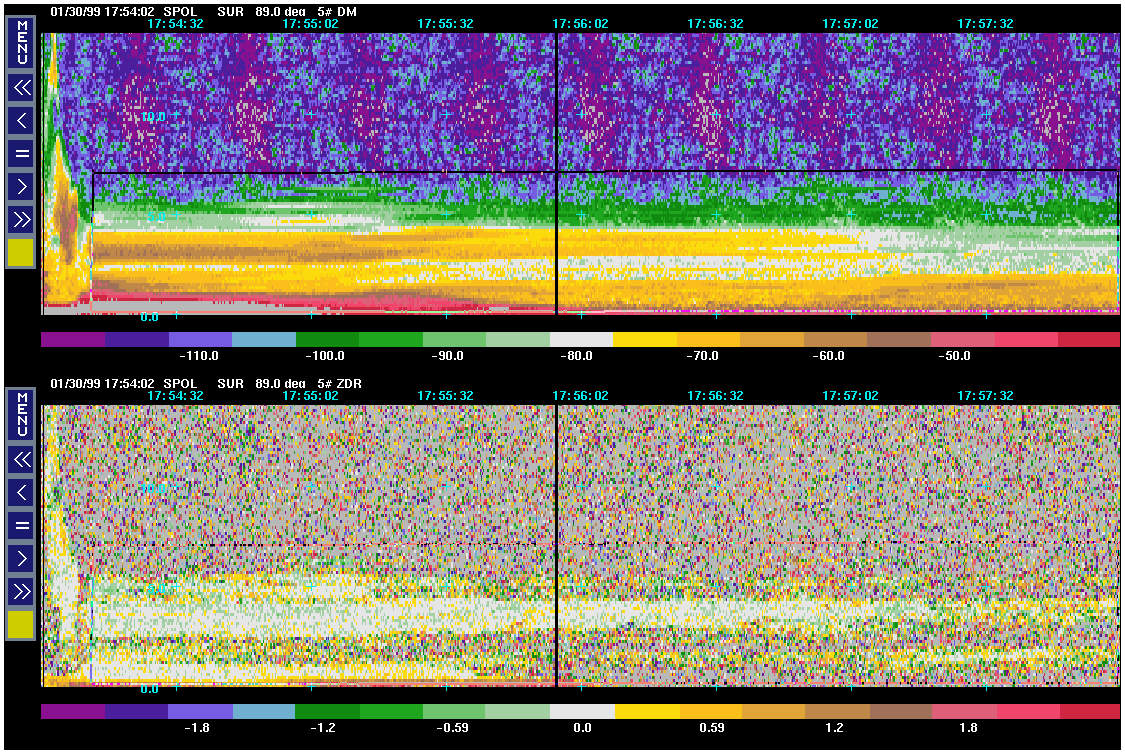
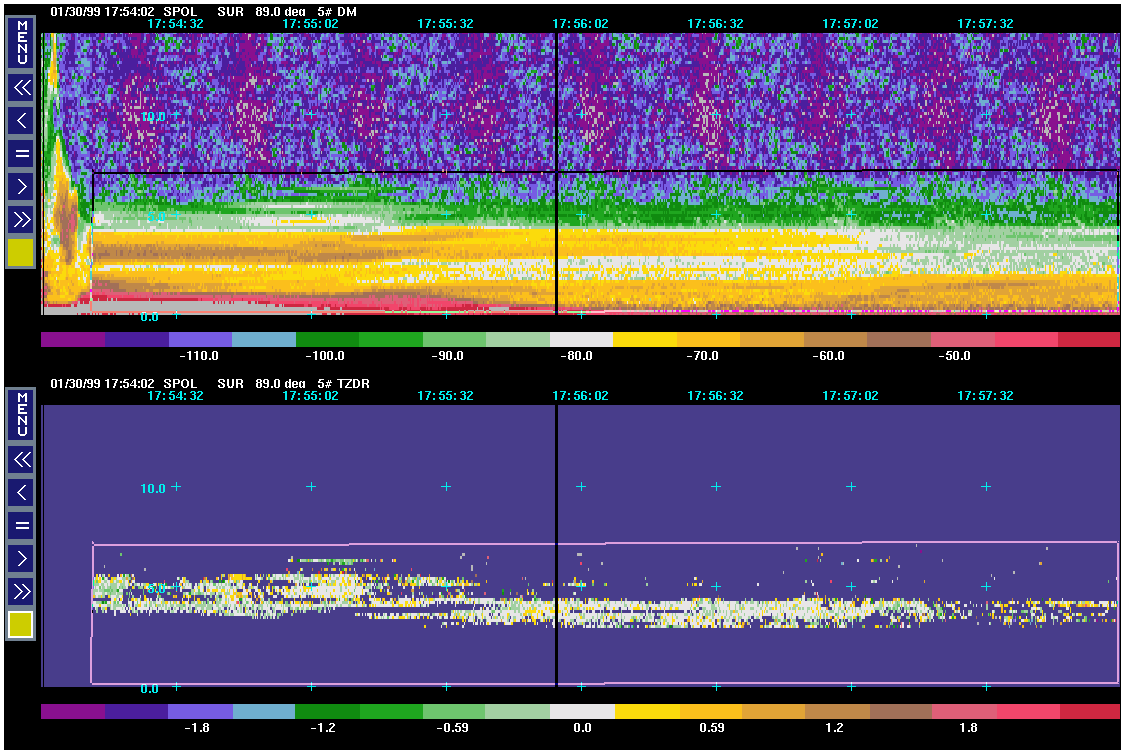
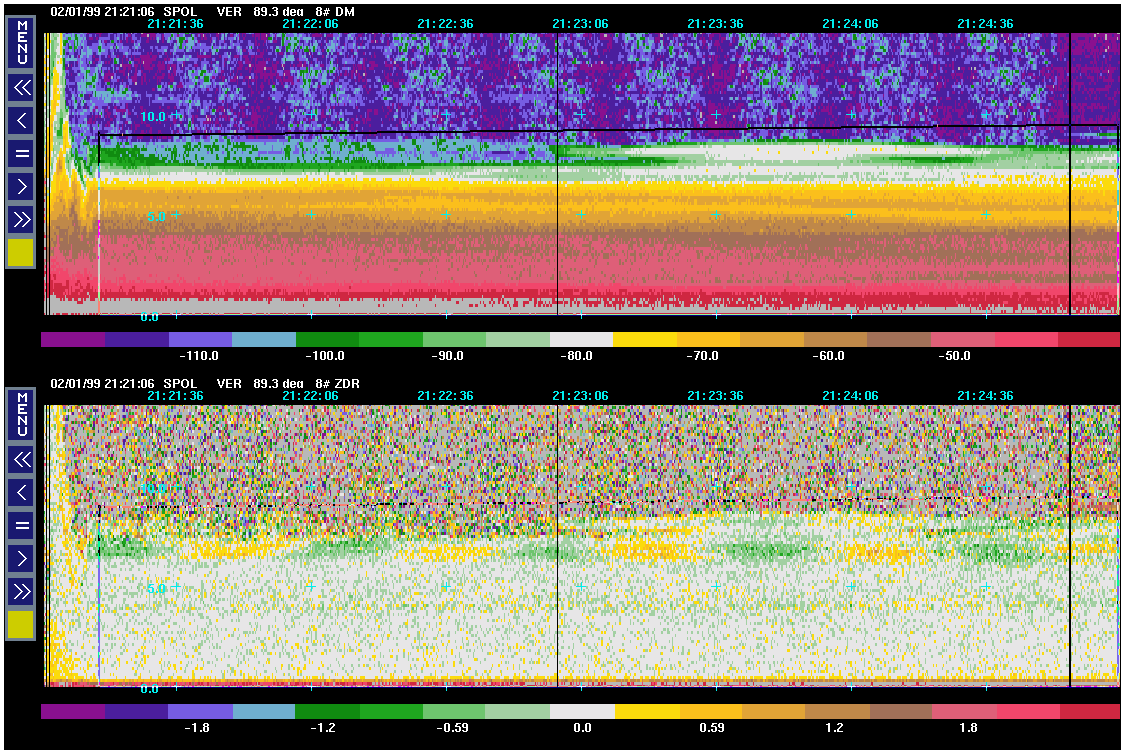
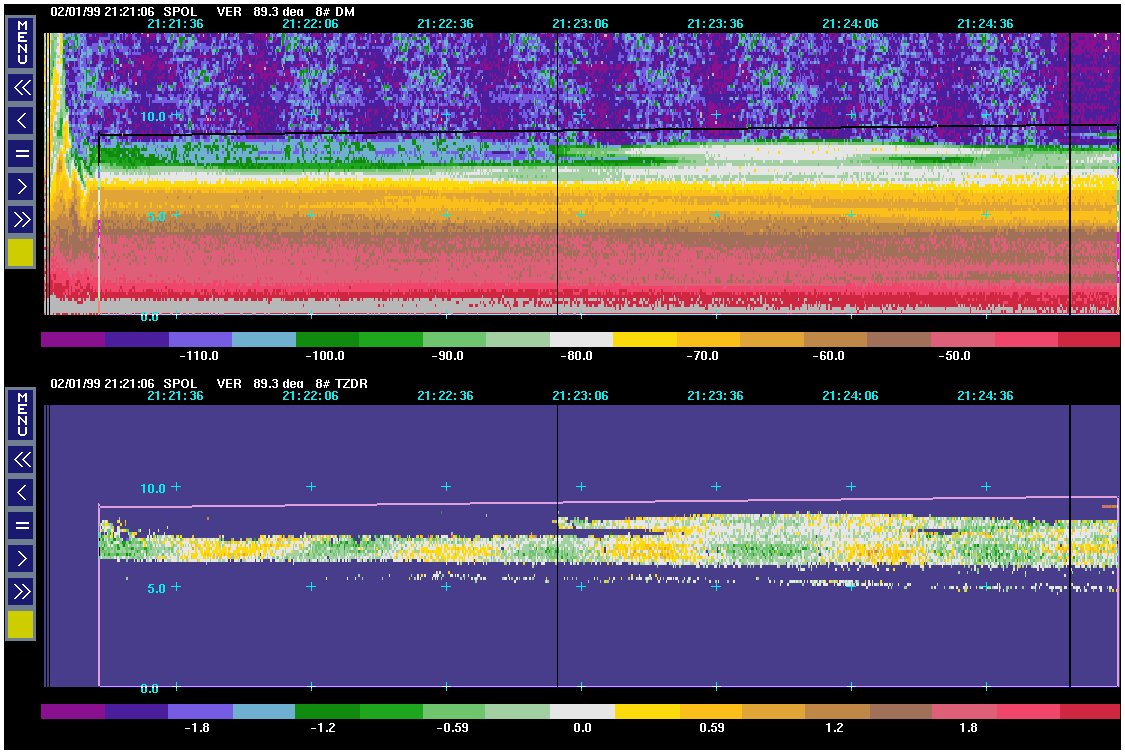
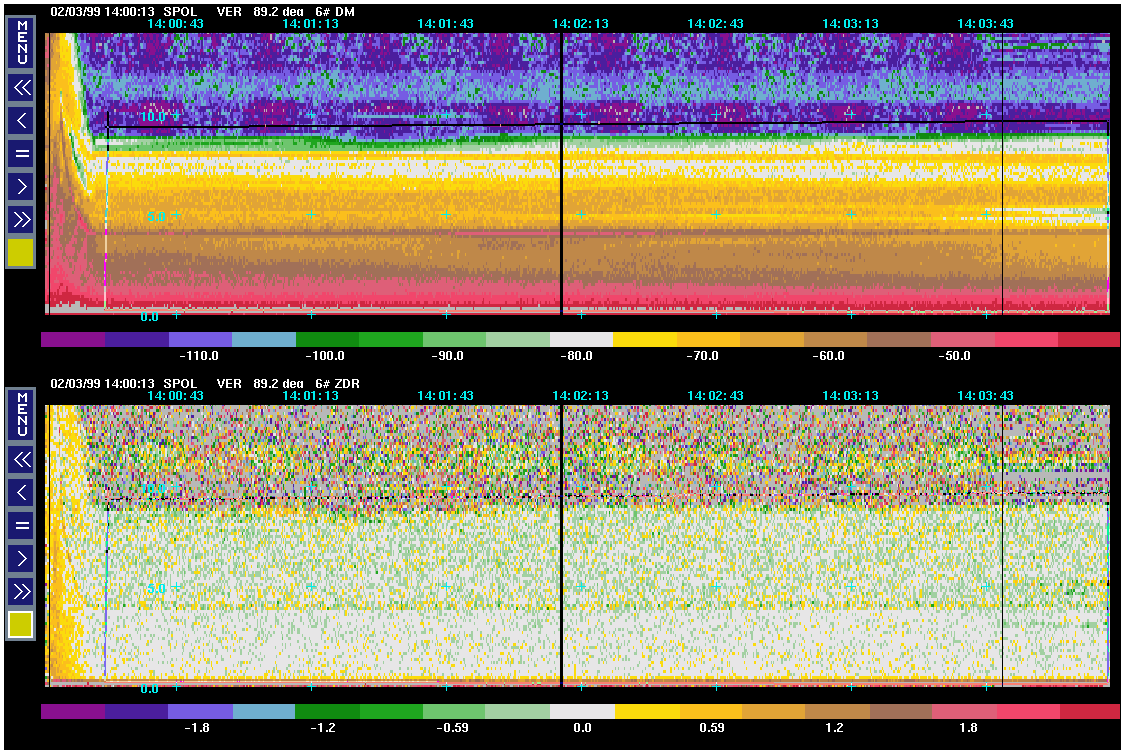
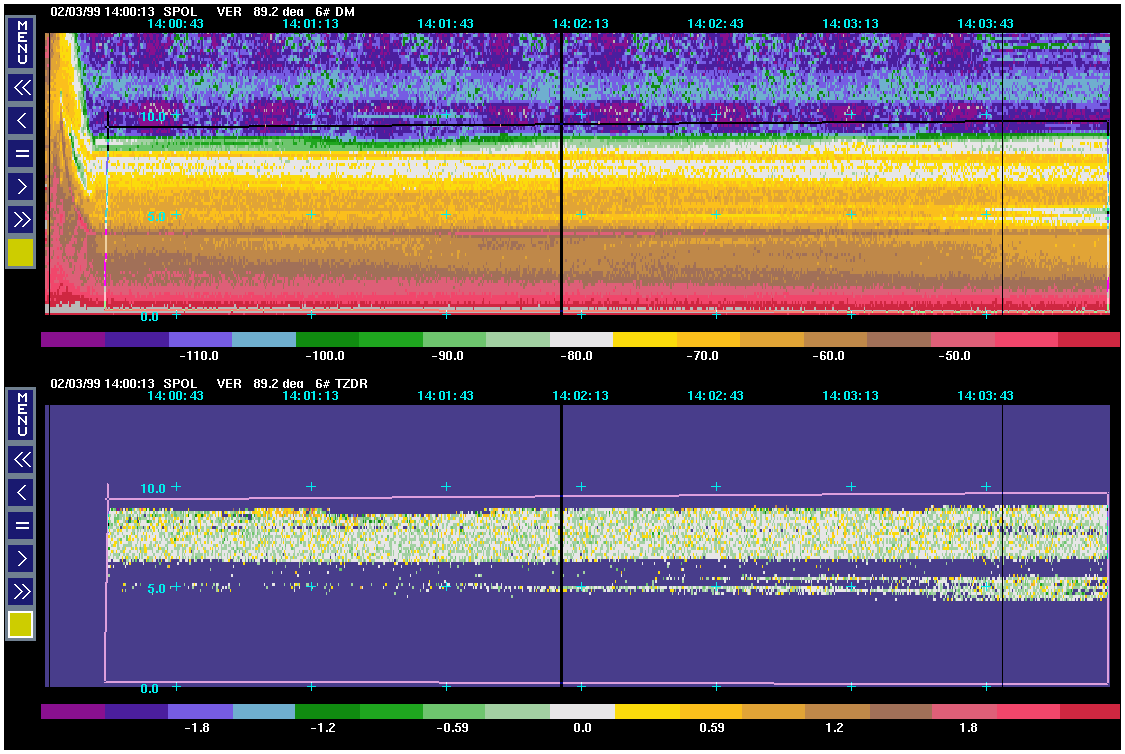
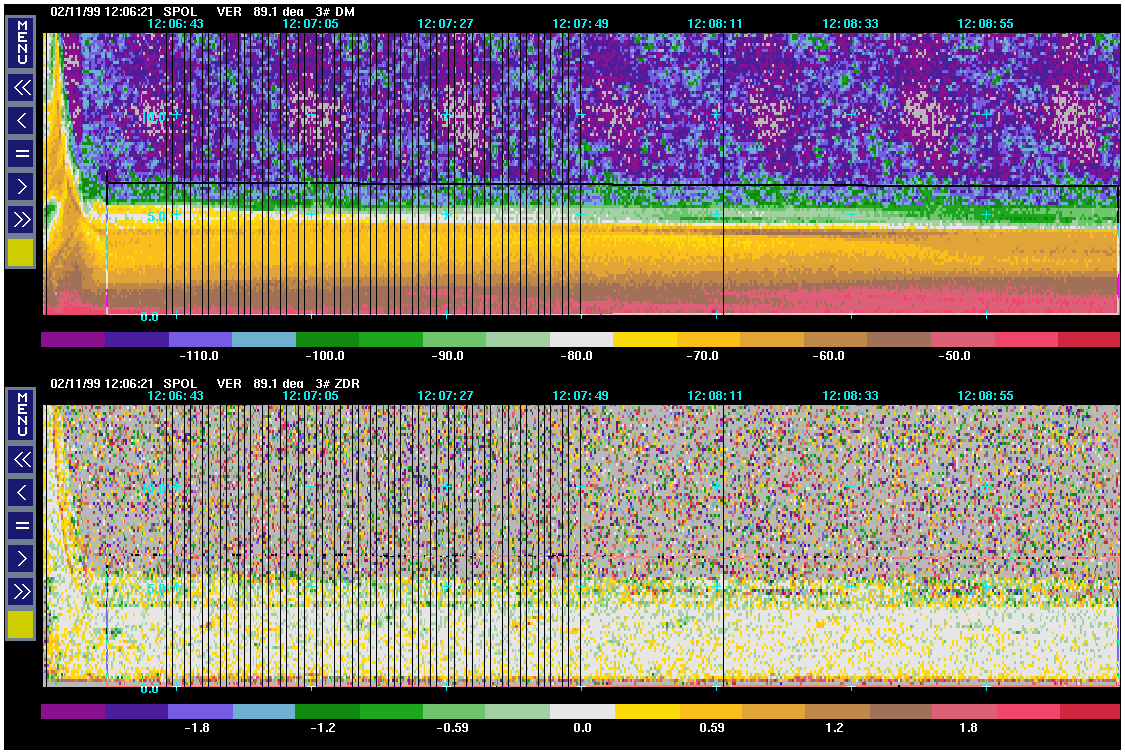
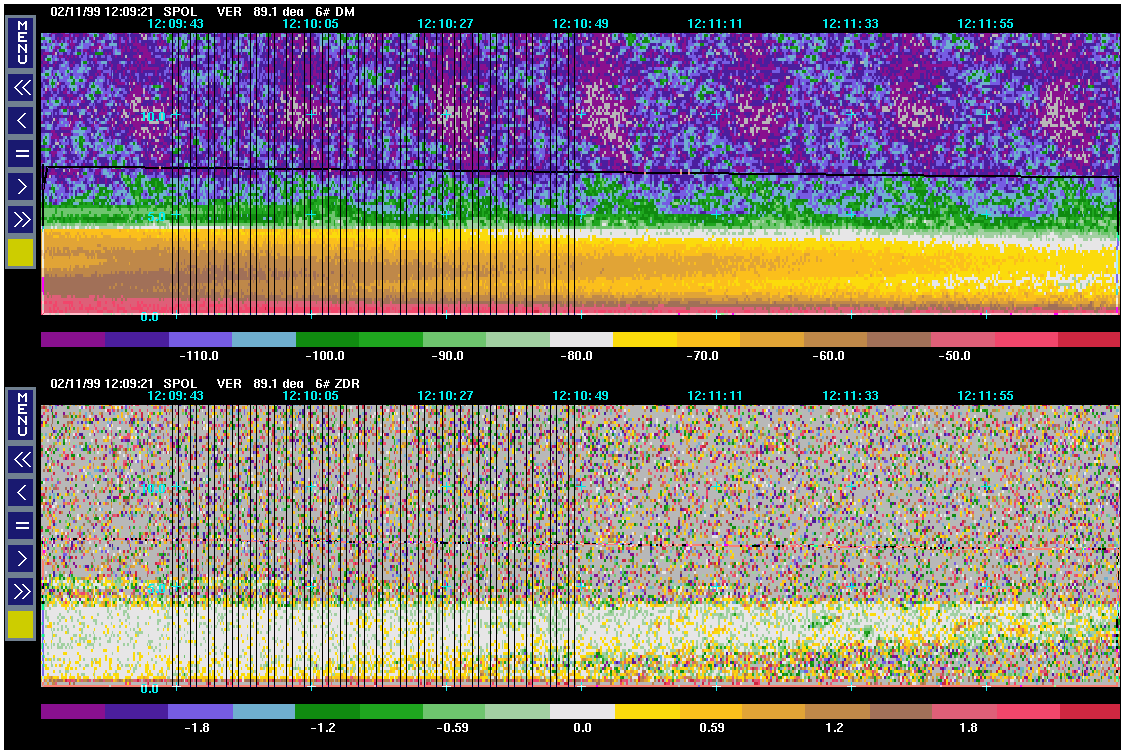
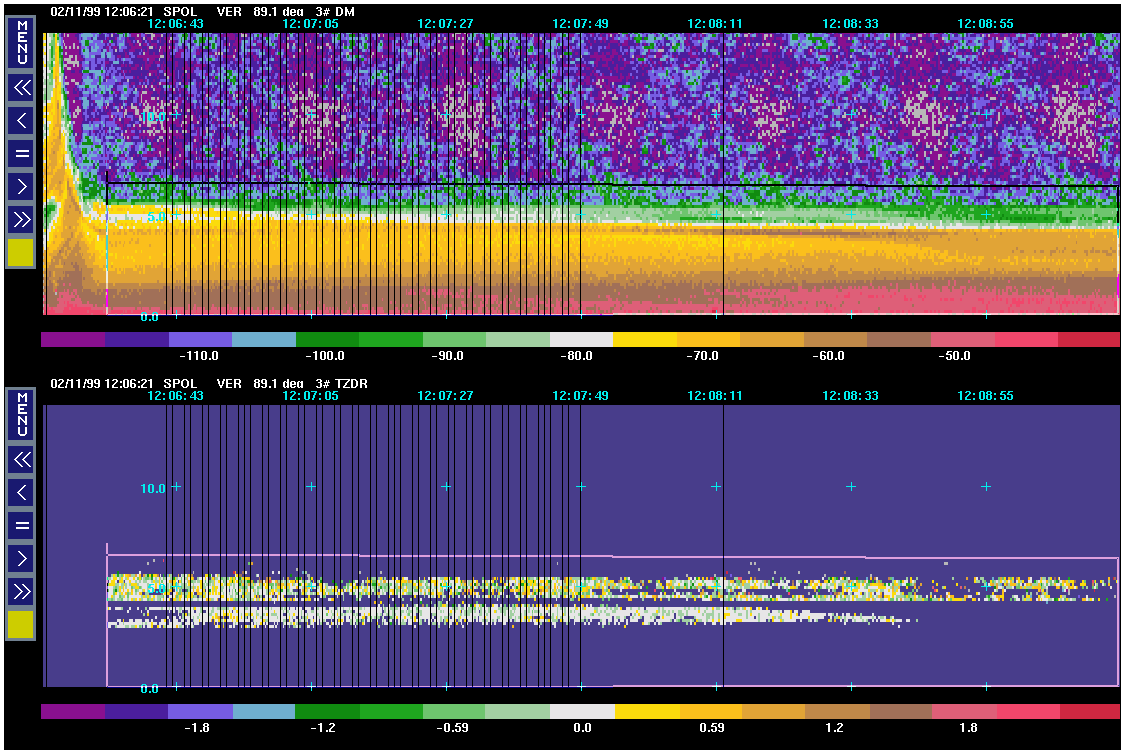
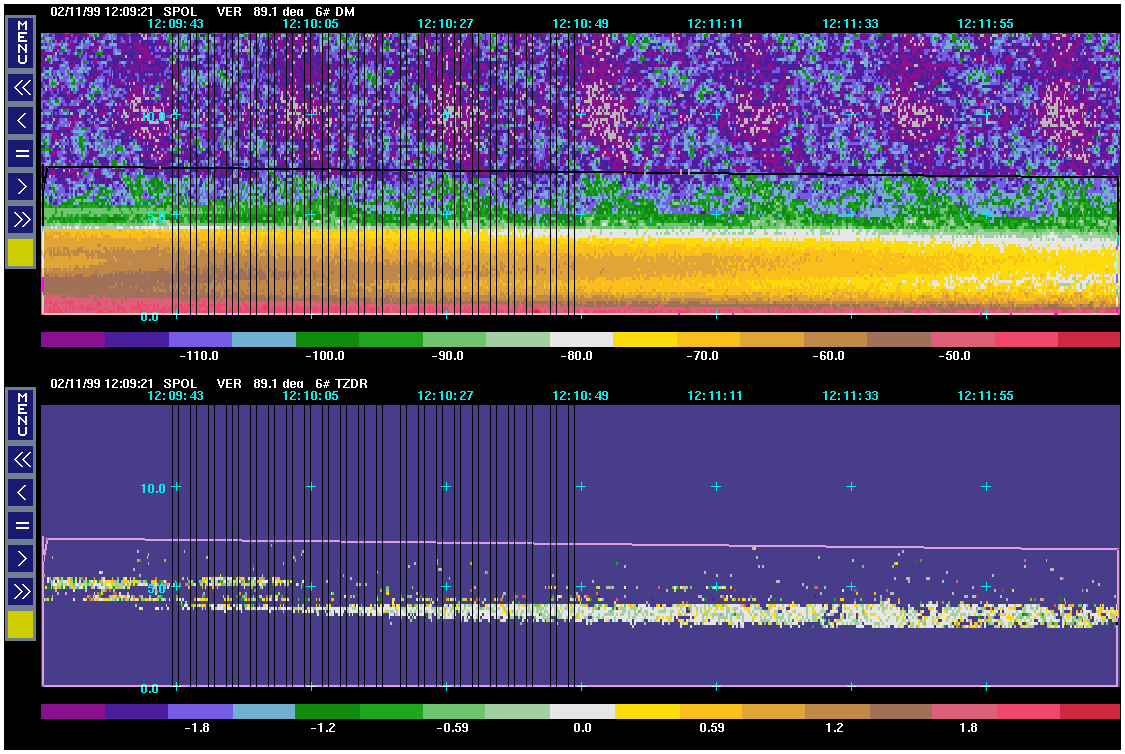
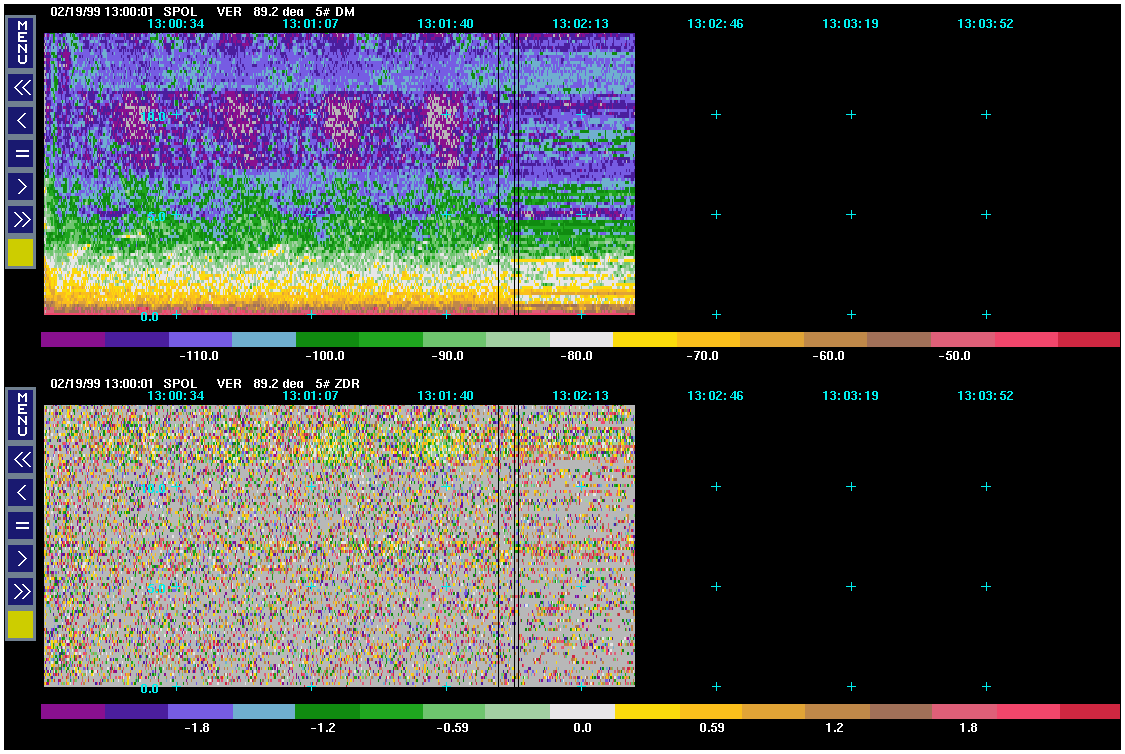
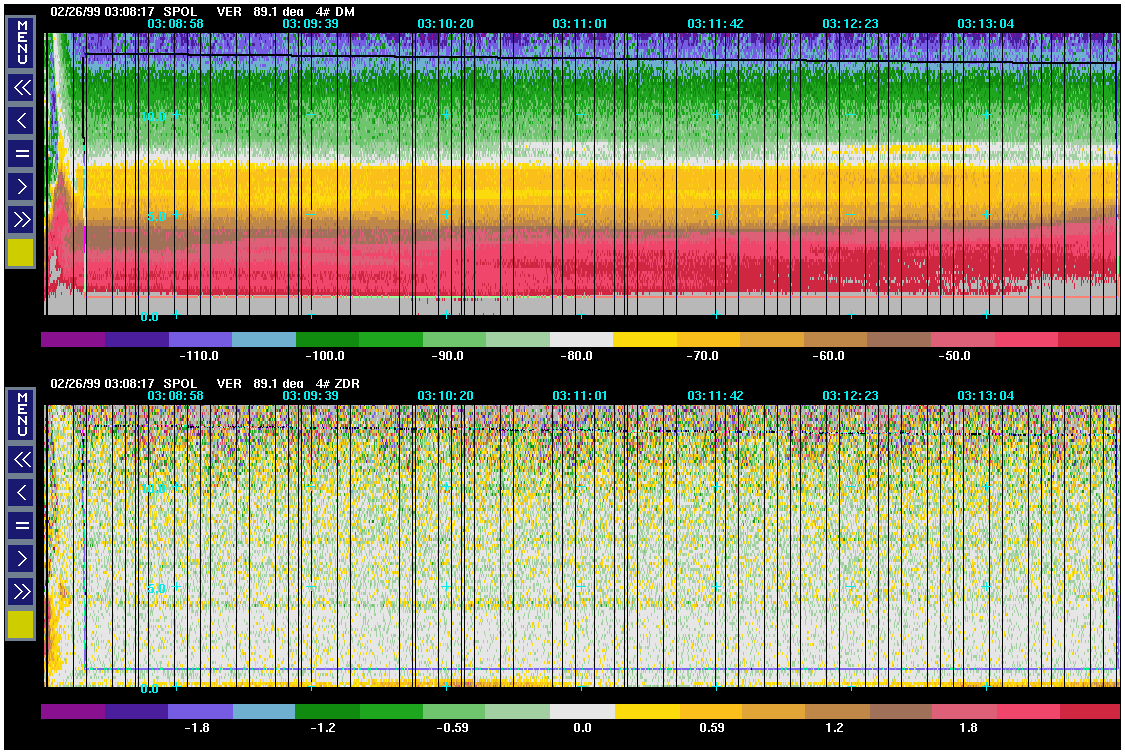
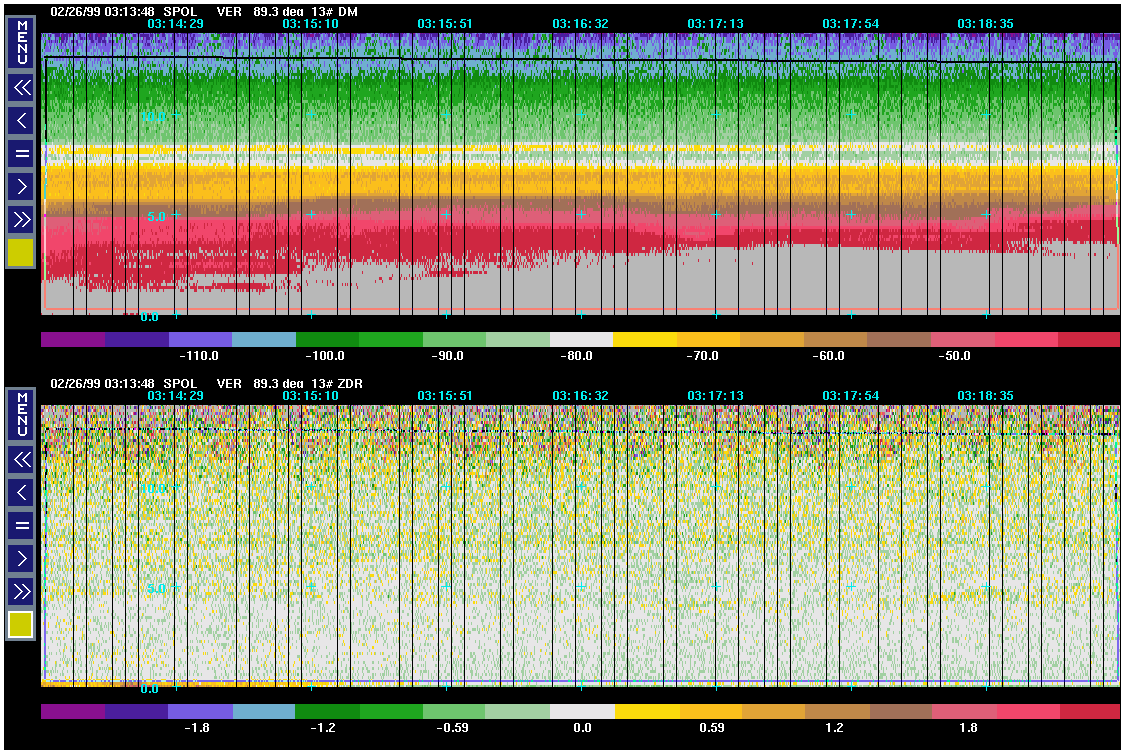
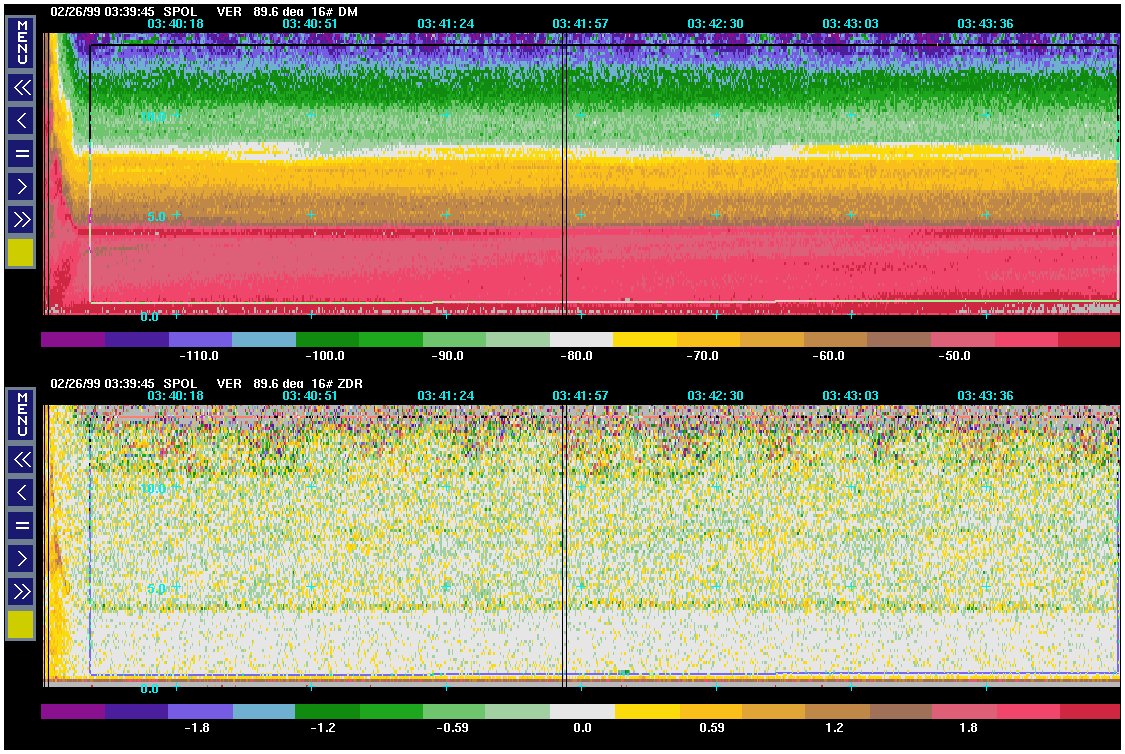
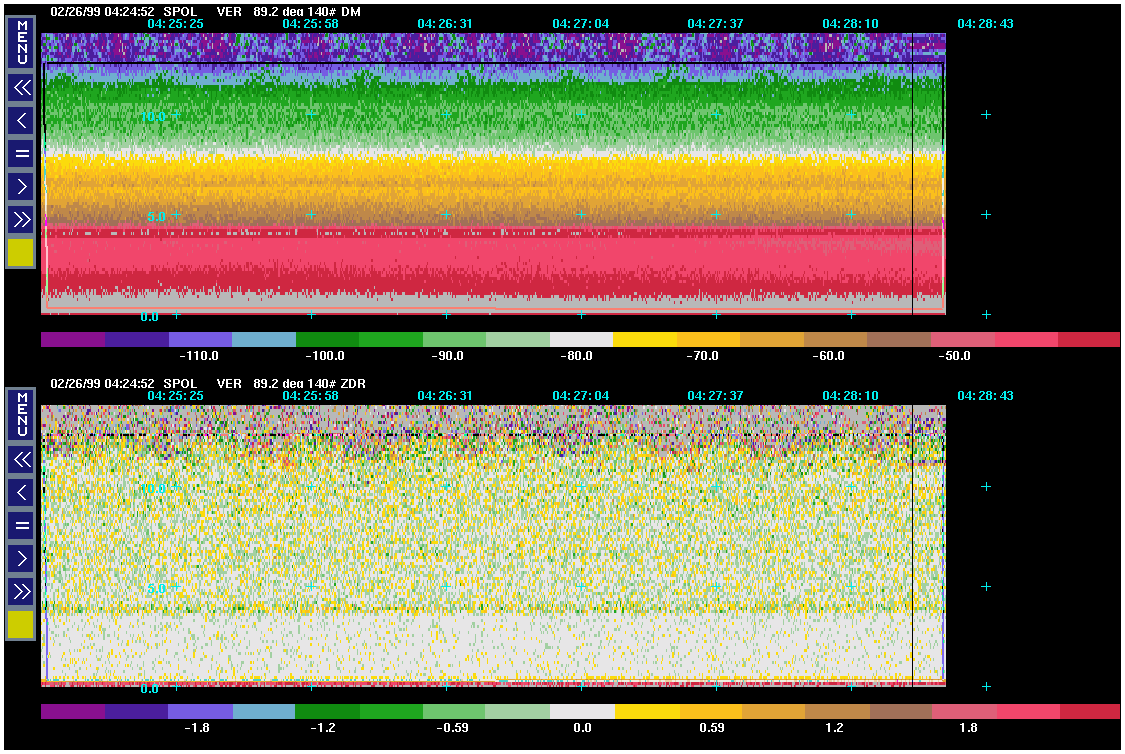
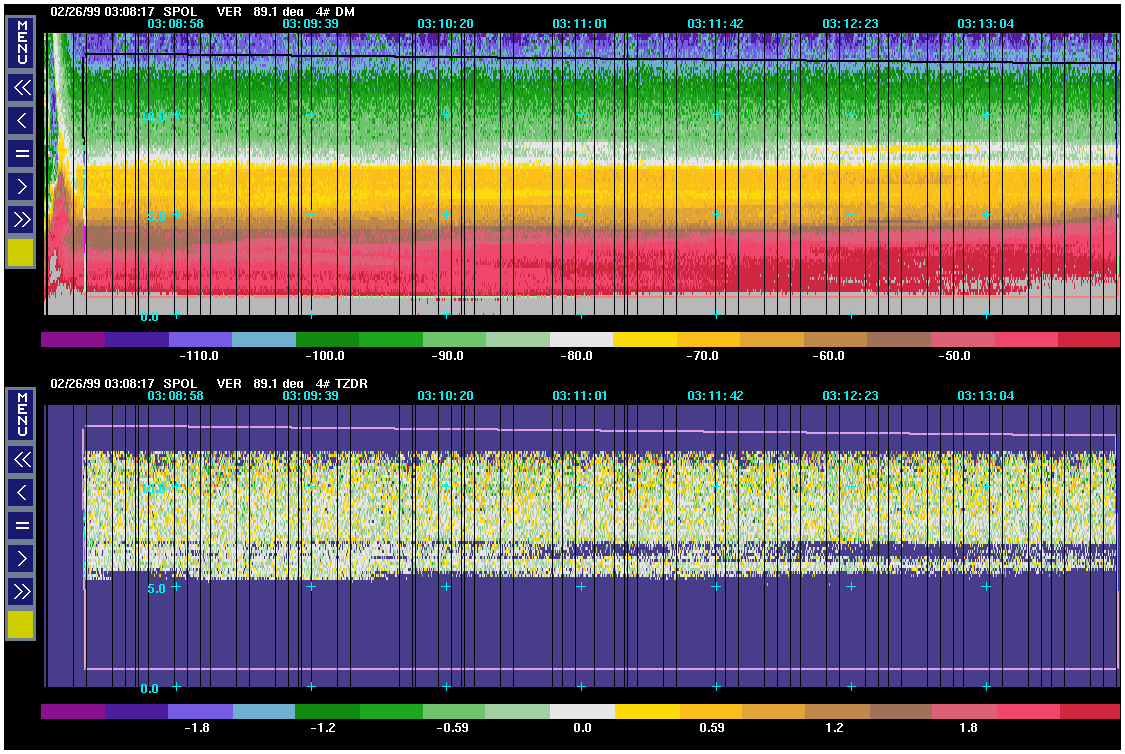
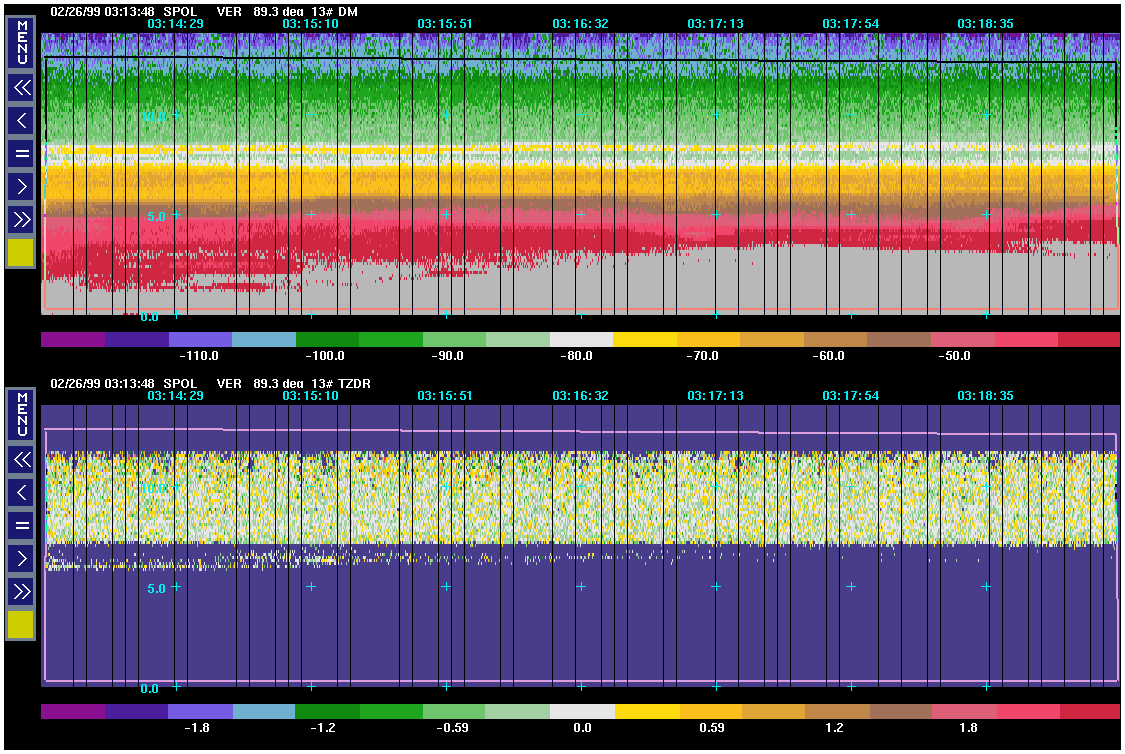
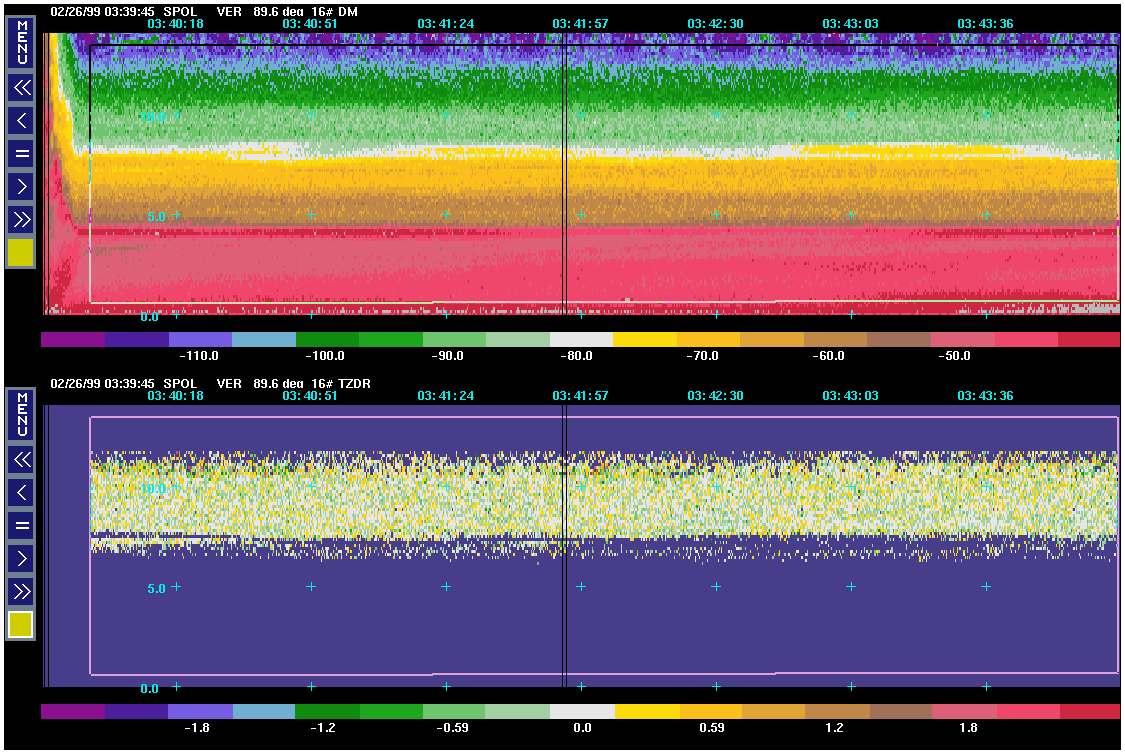
For TRMM-LBA, about 16 separate events of vertical pointing were
logged. Of these, one was considered to be unsuitable for use, and
three others were marginal. Within the 16 events, subsets were
occasionally deliniated and processed separately. These subsets
provide an indicator of the short-term consistency of the procedure
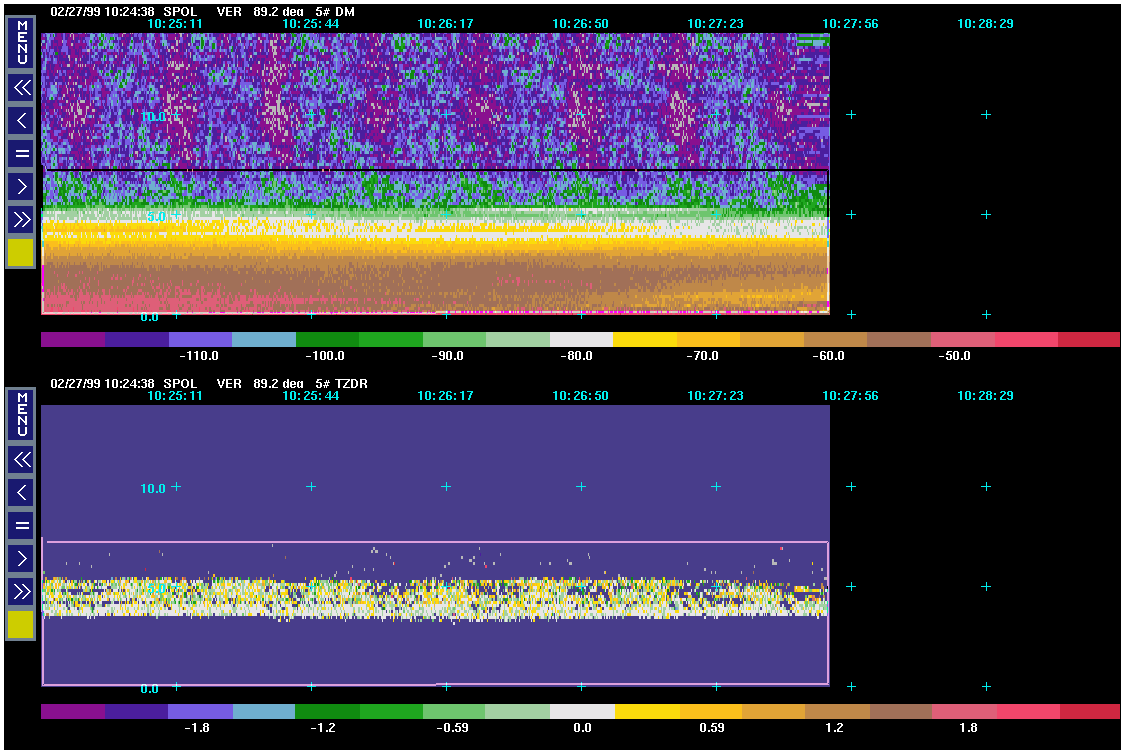
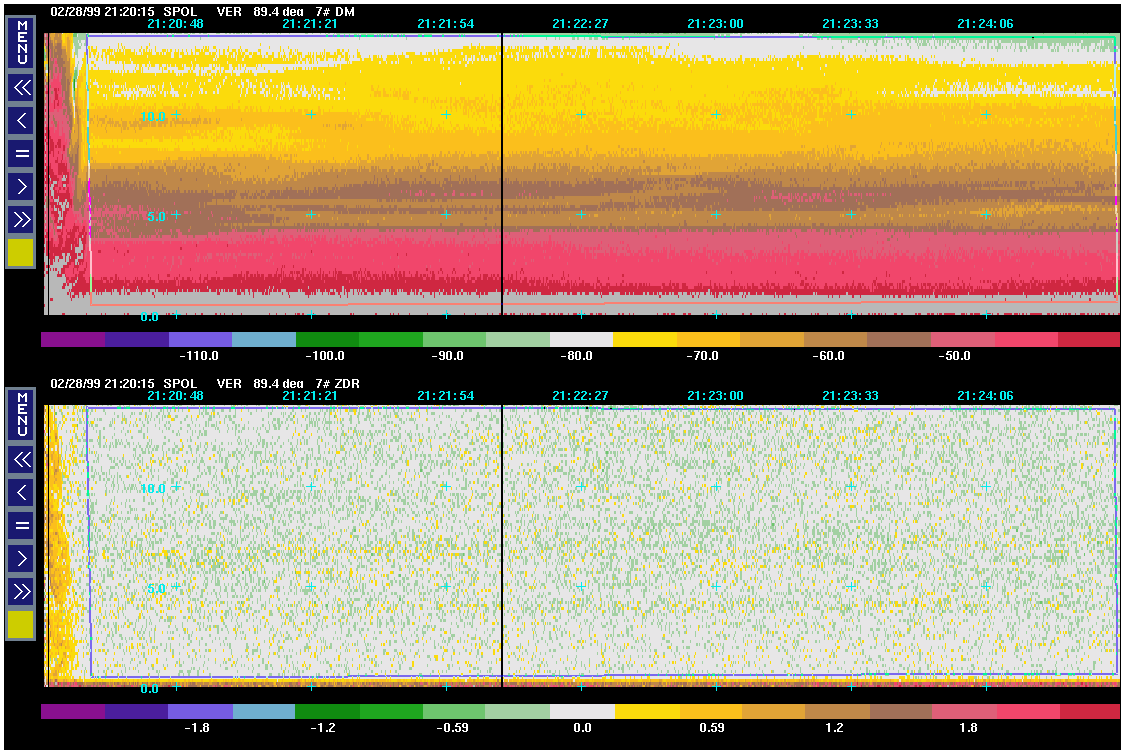
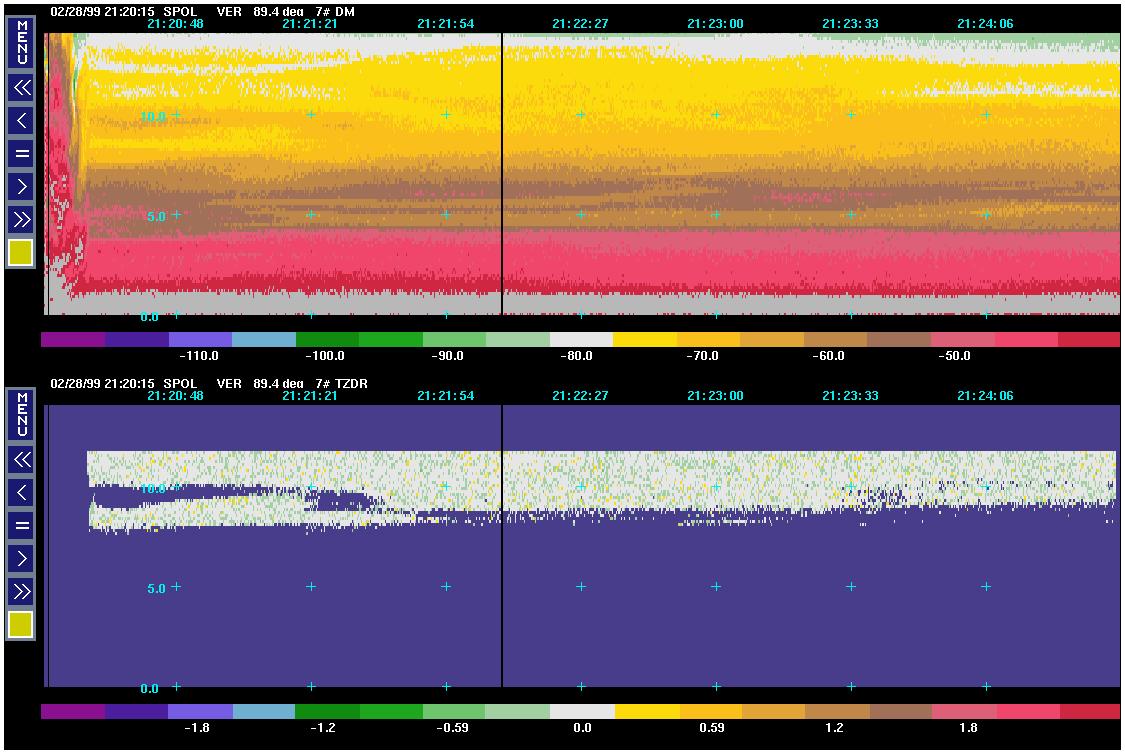
and results. All events are listed in Table 2. Each independent
event is separated by a horizontal line; within each event, any
subsets are shown on their own line. For determination of gross
conclusions, subsets are first combined to provide a single set of
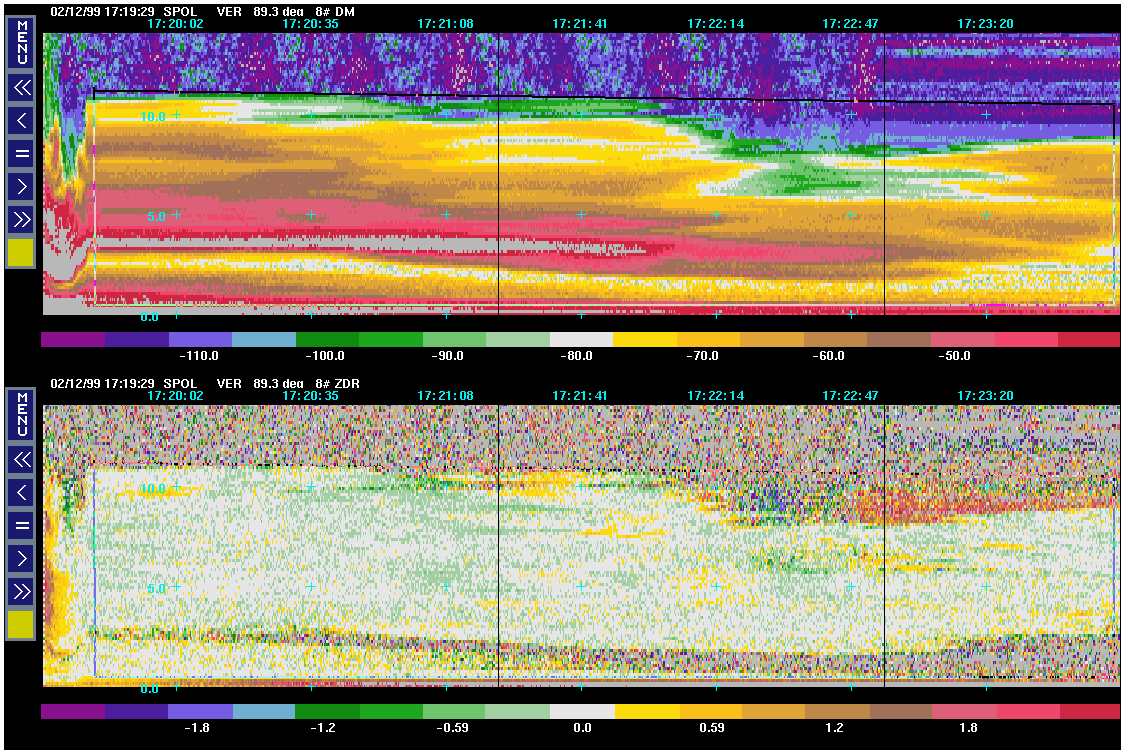
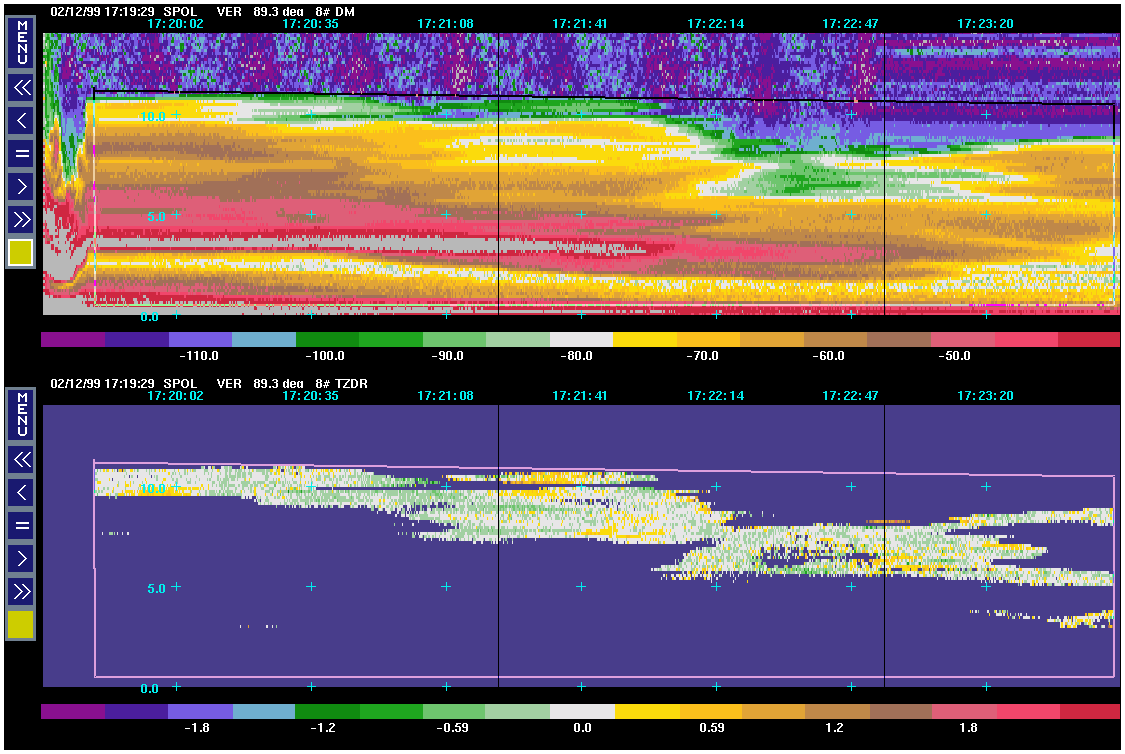
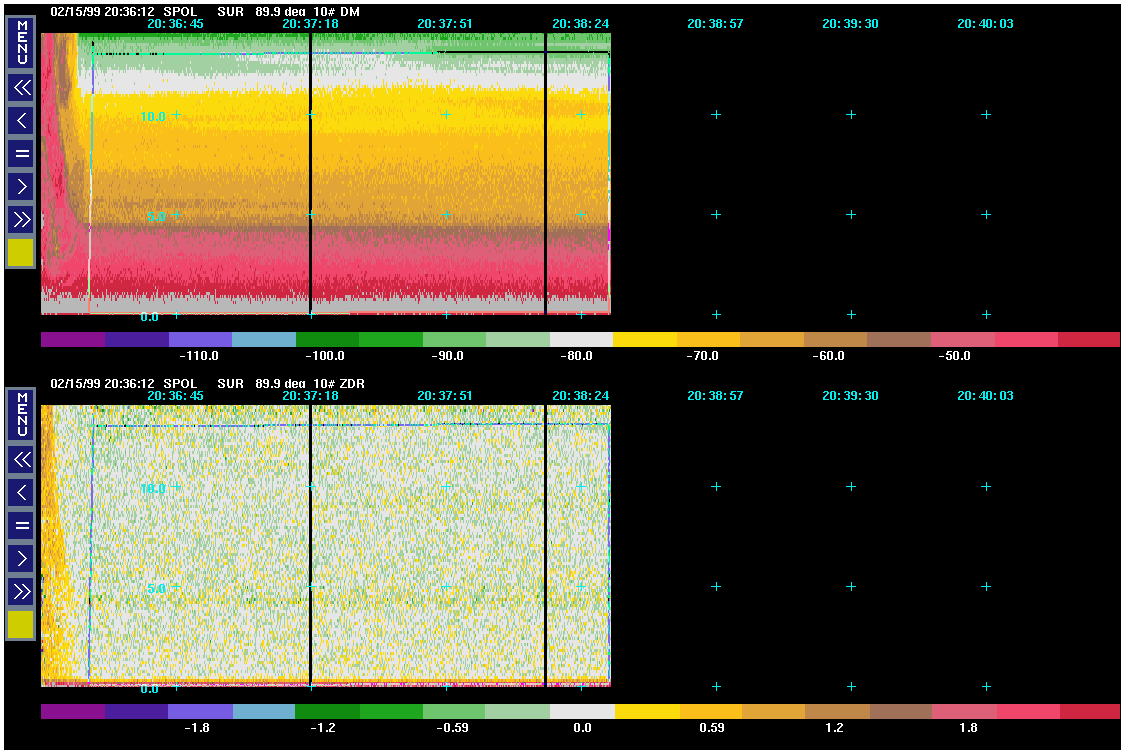
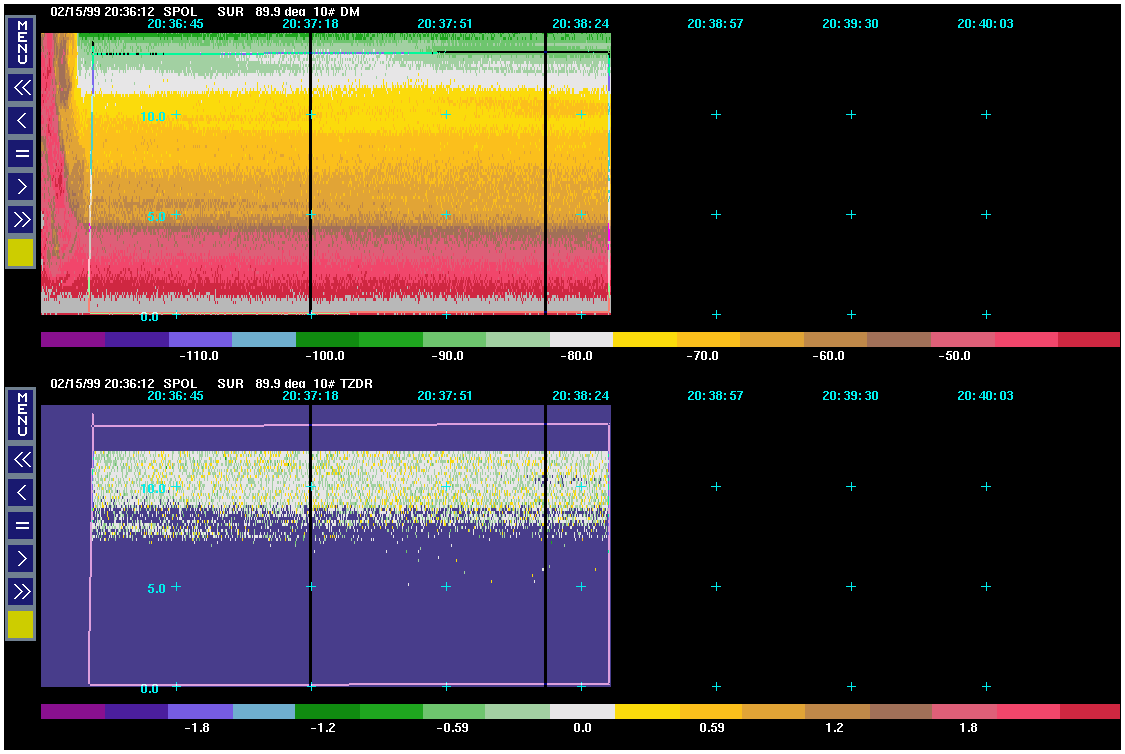
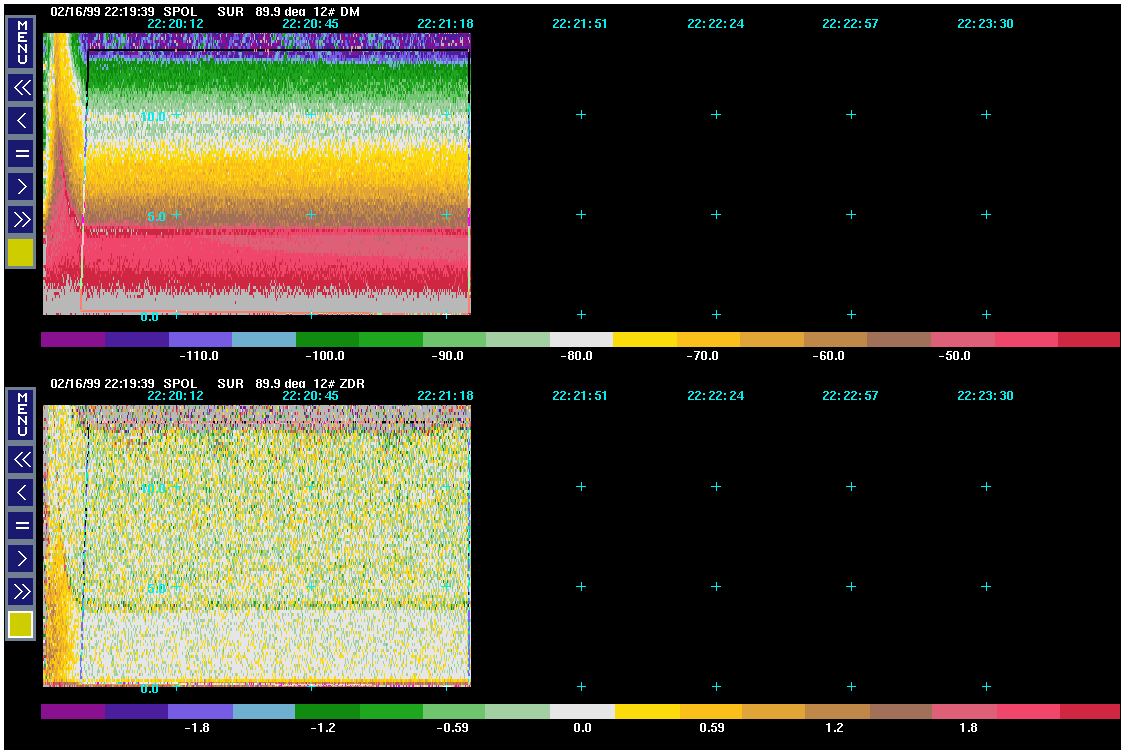
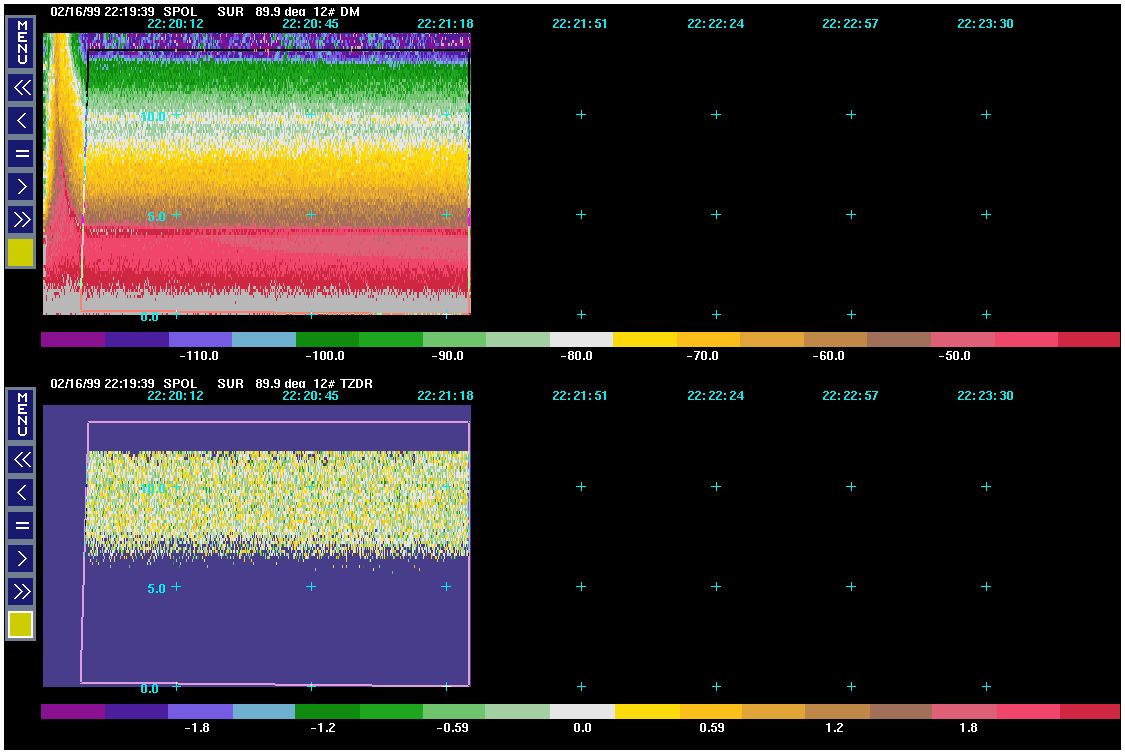
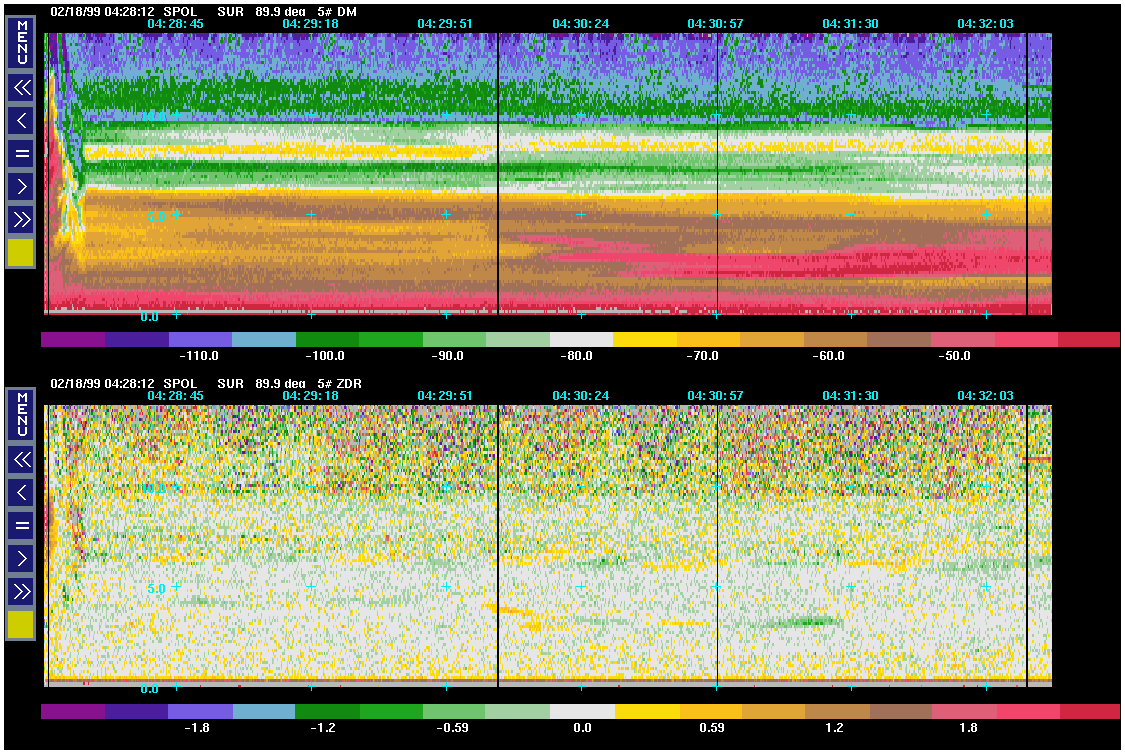
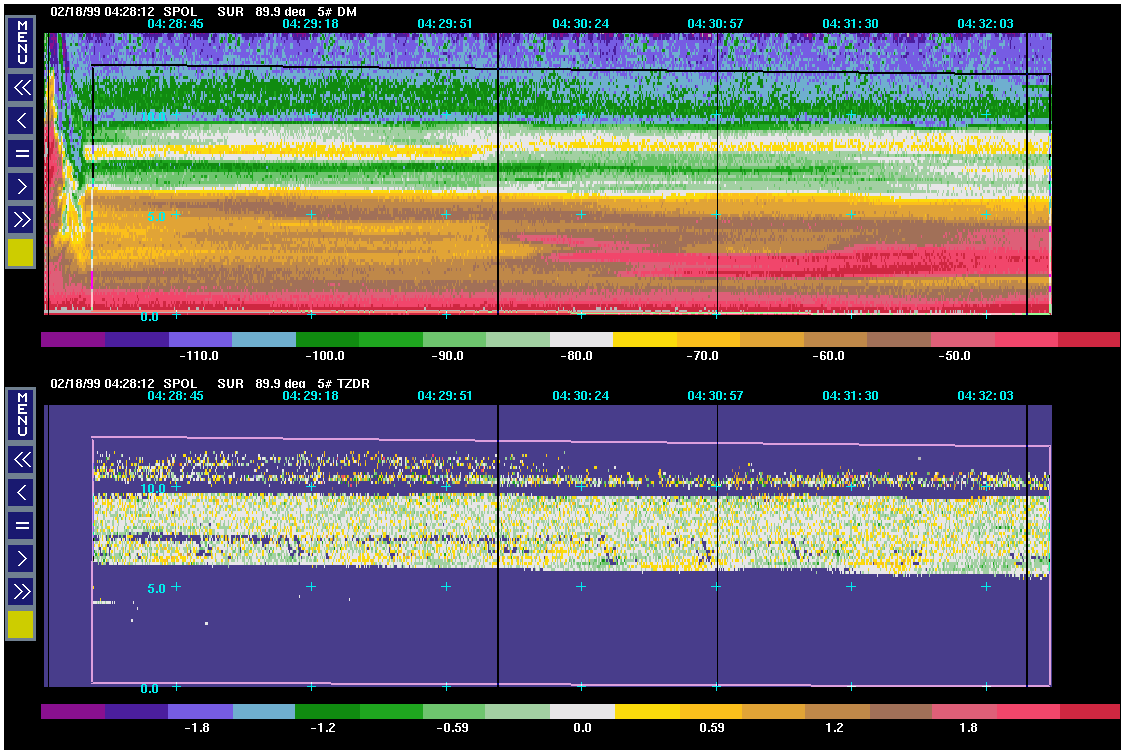
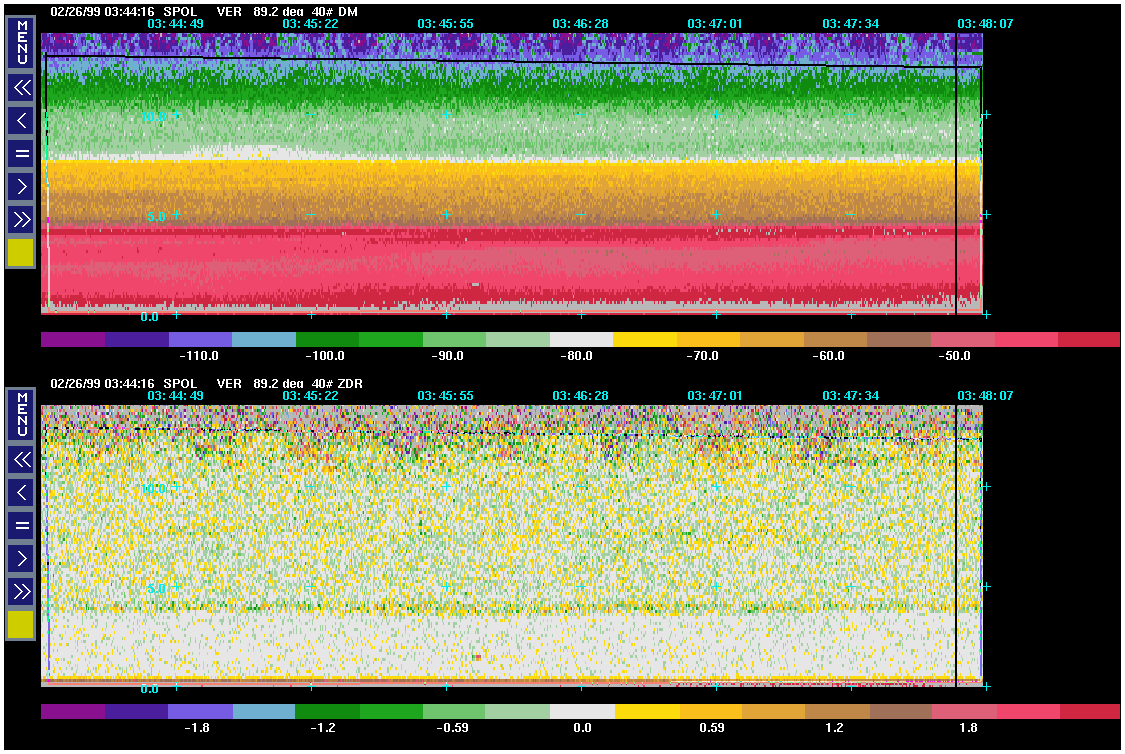
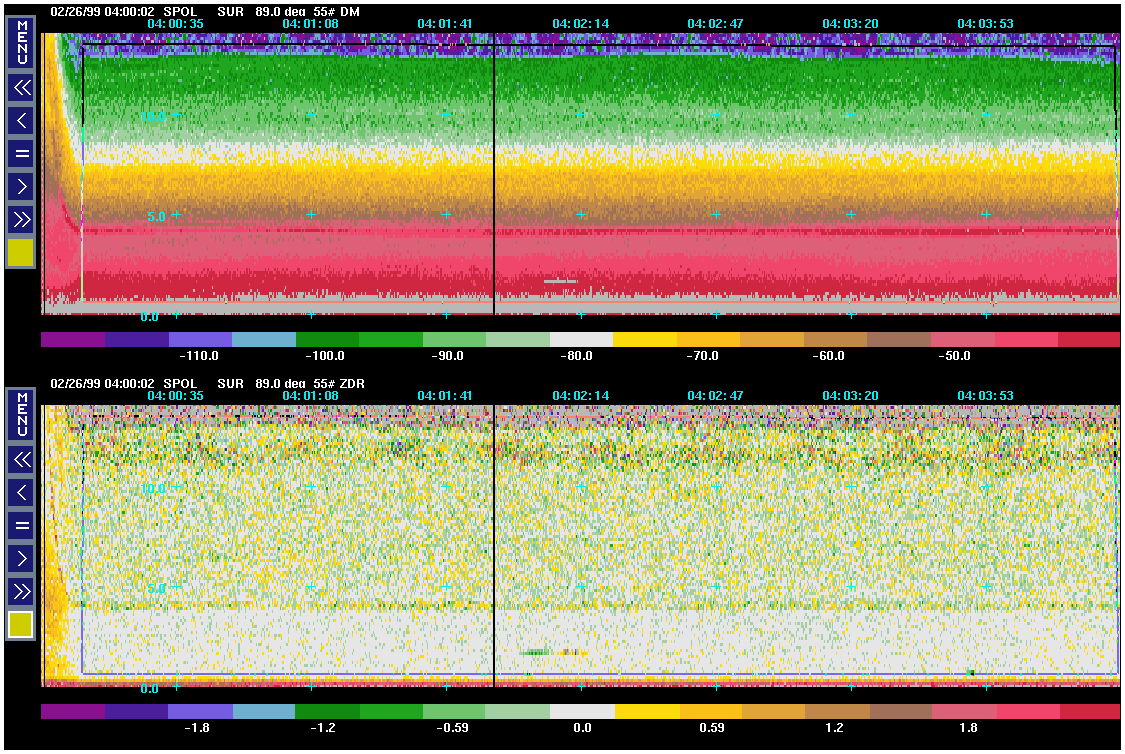
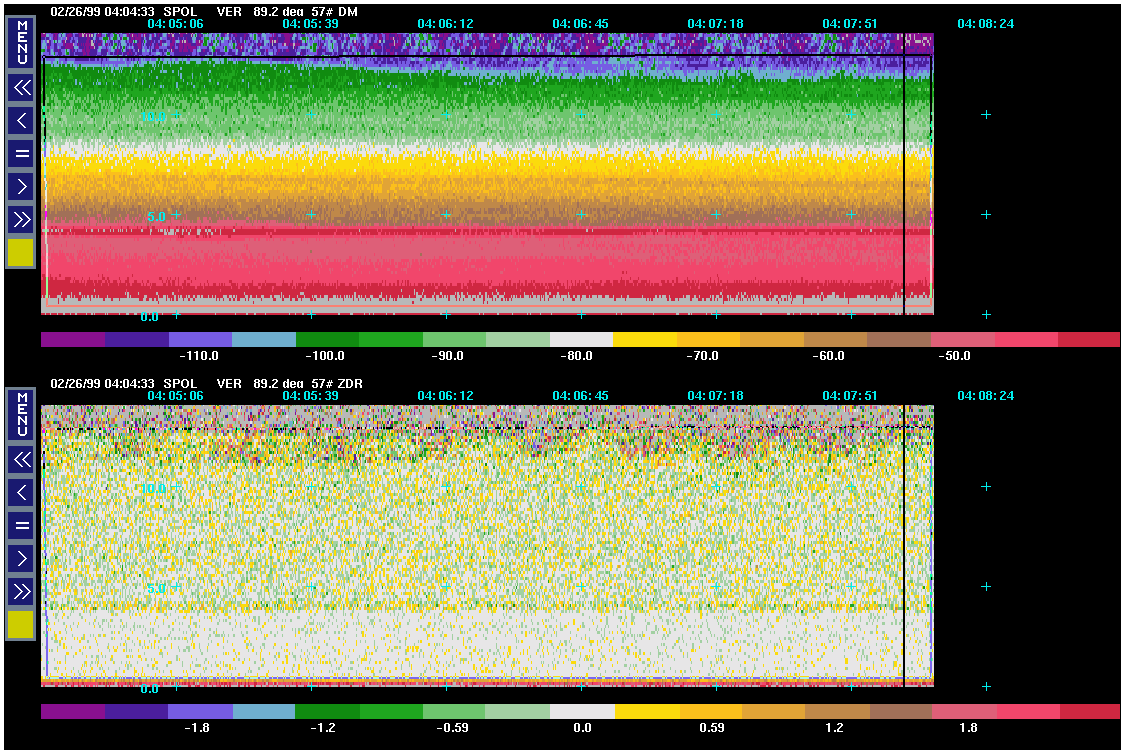
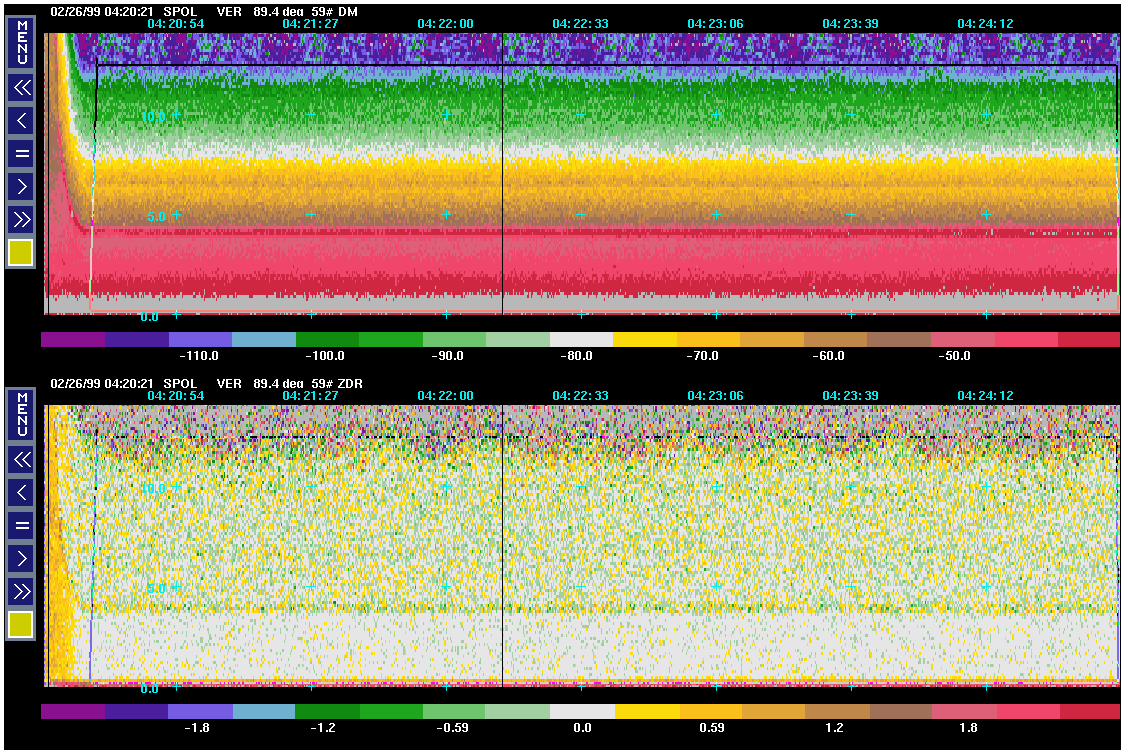
event values. Within the table, links are provided to images of the
data (time section of received power, DM, and Zdr, both raw and
thresholded: ZDR or TZDR, respectively), or the histogram produced in
the analysis.
Table 2 shows column entries for date and time, and Zdr bias
statistics (mean value, standard deviation, and number of points). In
addition, a correction to the determination is shown, as well as the
final bias determination for each event. Test pulse information is
included for completeness (actually, this has yet to be
compiled), and a comment.
The correction to the bias determination comes about due to the fact
that the determinations were made in log-space. The mean of the log
distribution differs from the mean of the equivalent linear
distribution by one-half the square of the standard deviation; when
the distribution is well-behaved (as virtually all these are), a
simple correction to the log-determined mean is appropriate.
The Results Section follows Table 2.
TABLE 2. Determined values of Zdr Bias, by event.
| Date |
UTC |
|
Log Correction |
True Zdr Bias (dB) |
Zdr Test
Pulse,dBm |
Comment |
| 990120 |
1810 |
|
.02 |
0.01 |
n/a |
|
| 990122 |
1847 |
|
.02 |
-.04 |
n/a |
fair case, only |
| 990130 |
0330 |
|
.04 |
-.03 |
n/a |
|
| 990130 |
1754 |
|
.05 |
0.03 |
n/a |
fair case, only |
| 990201 |
2121 |
|
.05 |
-.03 |
n/a |
|
| 990203 |
1400 |
|
.03 |
-.05 |
n/a |
|
| 990211 |
|
|
|
|
|
| fair case, only |
| fair case, only |
|
| 990212 |
1719 |
|
.03 |
-.02 |
n/a |
|
| 990215 |
2036 |
|
.01 |
-.05 |
n/a |
|
| 990216 |
2219 |
|
.06 |
0.01 |
n/a |
|
| 990218 |
0428 |
|
.04 |
0.00 |
n/a |
|
| 990219 |
1300 |
|
n/a |
n/a |
n/a |
bad data (sys problems) |
| 990226 |
|
|
| .06 |
| .05 |
| .05 |
| .04 |
| .05 |
| .045 |
| .04 |
| .045 |
|
| 0.01 |
| 0.00 |
| 0.00 |
| 0.01 |
| 0.01 |
| 0.02 |
| 0.01 |
| 0.02 |
|
| n/a |
| n/a |
| n/a |
| n/a |
| n/a |
| n/a |
| n/a |
| n/a |
|
|
| 990226 |
|
|
|
|
|
|
| 990227 |
|
|
|
|
|
|
| 990228 |
2120 |
|
.01 |
-.05 |
n/a |
|
All results are based upon analysis of raw, uncorrected S-Pol data.
- Within a single event, Zdr bias determinations are very reproducible
- Over the project period, Zdr bias is stable to within +/- .05 dB
of zero
- Final, absolute accuracy of corrected Zdr is well within the goal of
+/- .2 dB.
Other items of note (complete supporting information is not provided):
- There is an increase in the standard deviation of the bias estimate
when comparing liquid hydrometeors with ice.
- Zdr bias computations must be adjusted for log-averaging when
doing computations in log space.
Document Maintenance:
Bob Rilling, / NCAR Atmospheric Technology Division
Created: 18-Aug-2000
Last modified: