| |
Click on the maps for larger image |
| |
|
| Regional Surface Meteorological Networks |
| |
|
| WFMY WeatherNet
- WFMY-TV in Greensboro, North Carolina operates this network of 23 stations located
primarily at schools throughout North Carolina and one in Virginia. The
network provides up to 1-minute observations of air temperature, relative
humidity, wind speed, wind direction, precipitation, and barometric pressure.
For further information visit the
WFMY network page. |
No map yet. |
| |
|
| WAVY WeatherNet
- WAVY-TV in Norfolk, Virginia operates this network of 46 stations located
primarily at schools throughout Virginia and North Carolina (35 in Virginia). The
network provides up to 1-minute observations of air temperature, relative
humidity, wind speed, wind direction, precipitation, and barometric pressure.
For further information visit the
WAVY network page. |
No map yet. |
| |
|
| WNCN WeatherNet
- WNCN-TV in Raleigh, North Carolina operates this network of 58 stations located
primarily at schools throughout North Carolina and Virginia (5 in Virginia). The
network provides up to 1-minute observations of air temperature, relative
humidity, wind speed, wind direction, precipitation, and barometric pressure.
For further information visit the
WNCN network page. |
No map yet. |
| WCYB WeatherNet
- WCYB-TV in Brisol, Tri-Cities, Virginia operates this network of 59 stations located
primarily at schools throughout Virginia, Tennessee, North Carolina and one in Kentucky
(33 in Virginia). The
network provides up to 1-minute observations of air temperature, relative
humidity, wind speed, wind direction, precipitation, and barometric pressure.
For further information visit the
WCYB network page. |
No map yet. |
| |
|
| State and Local Surface Meteorological Networks |
| |
|
| Road Weather Information System (RWIS) - The Virginia Department
of Transportation (DOT), Richmond County, and Suffolk County operate this network of
40 stations located throughout Virginia. The network provides variable temporal
resolution observations of air temperature, relative humidity, dew point, wind speed,
wind direction, visibility, and precipitation (yes/no). For further information
visit the
Surface Systems, Inc Road
Weather page. |
Map at Web Site |
| WWBT WeatherNet
- WWBT-TV in Richmond, Virginia operates this network of 66 stations located
primarily at schools throughout Virginia. The
network provides up to 1-minute observations of air temperature, relative
humidity, wind speed, wind direction, precipitation, and barometric pressure.
For further information visit the
WWBT network page. |
No map yet. |
| |
|
| WDBJ WeatherNet
- WDBJ-TV in Roanoke, Virginia operates this network of 15 stations located
primarily at schools throughout Virginia. The
network provides up to 1-minute observations of air temperature, relative
humidity, wind speed, wind direction, precipitation, and barometric pressure.
For further information visit the
WDBJ network page. |
No map yet. |
| |
|
| Precipitation and Radar Networks |
|
|
| Community Collaborative Rain, Hail and Snow Network (CoCoRaHS) - The Colorado
Climate Center at Colorado State University overseas this cooperative network of observers
located throughout Virginia. The network provides daily observations of
precipitation, snowfall, and snow depth. Hailpad observations are also made at many
locations. For further information visit the
CoCoRaHS home page. |
No map. |
| |
|
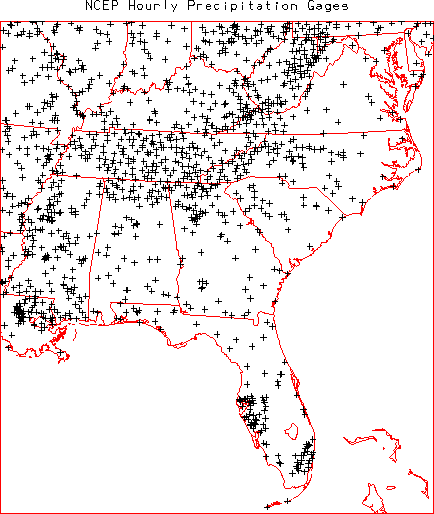
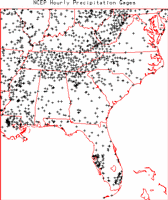
| NOAA/National Centers for Environmental
Prediction (NCEP) Hourly Precipitation Data - NOAA/NCEP routinely develops
a National Multi-sensor Hourly Precipitation Analysis (Stage II) data set from
hourly radar precipitation estimates and from hourly gage reports. The gage data
includes hourly observations from ~4000 gages across the US (44 in Virgina)
collected by the NOAA River Forecast Centers and sent to NCEP. Further information
on these data is available at:
http://wwwt.emc.ncep.noaa.gov/mmb/ylin/pcpanl/. |
 |
| |
|
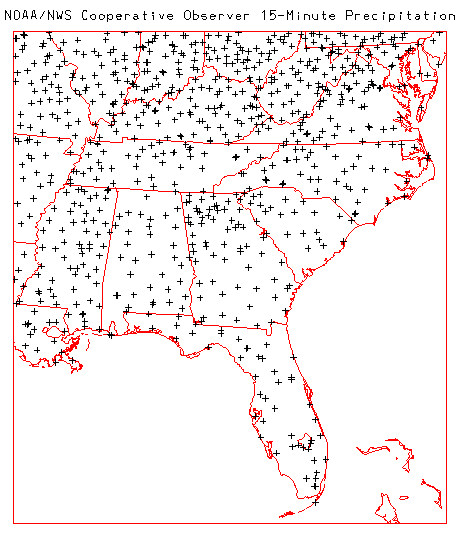
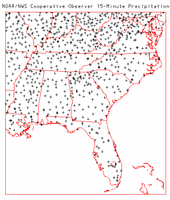
| NOAA/NWS Cooperative Observer 15-minute Precipitation Network - The NOAA/NWS
routinely collects 15-minute observations of precipitation from Fisher-Porter and Universal
rain gages operated by 2777 cooperative observers located throughout the US (53 in Virginia).
These data are archived at NOAA/NCDC as data set TD 3260. For further information visit the
NOAA/NCDC TD3260 page. |
 |
| |
|
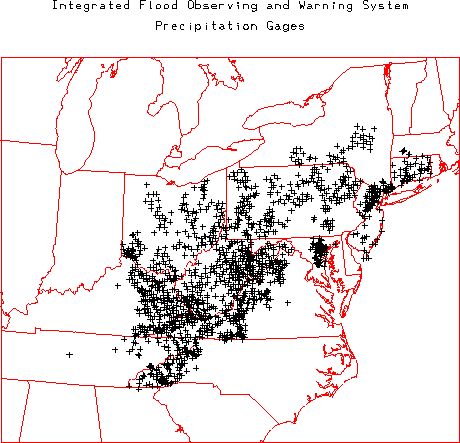
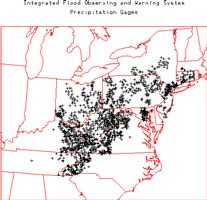
| Integrated FLood Observing and Warning System
(IFLOWS) Precipitation Network - The IFLOWS precipitation network is a collection
of various state operated Automated Flood Warning System (AFWS) networks throughout
the mid-Atlantic and northeastern portions of the United States. The network is
comprised of 1530 precipitation stations that provide 15-minute observations of
precipitation (255 in Virginia). These precipitation data are included as part of the NCEP
Precipitation data set described above. For further information visit the
AFWS home page. |
 |
| |
|
| Radiation and Flux Networks |
| |
|
| CERES Ocean Validation Experiment (COVE) - NASA operates
the Clouds and the Earth's Radiant Energy System (CERES) Ocean Validation
Experiment (COVE) at the Chesapeake Lighthouse (a Coast Guard platform
located 25 km east of Virginia near the mouth of Chesapeake Bay). The site
offers observations of direct and diffuse shortwave, global shortwave
(up and down), diffuse longwave (up and down), spectral irradiance (up and
down, UV irradiance (down), spectral radiance (up), station pressure,
temperature, relative humidity, wind direction, wind speed and sea surface
temperature. Additional colocated instrumentation included AERONET, GPS-MET,
C-MAN and MPLNET (Micropuls Lidar). For further information visit the
COVE home page. |
No map. |
| |
|
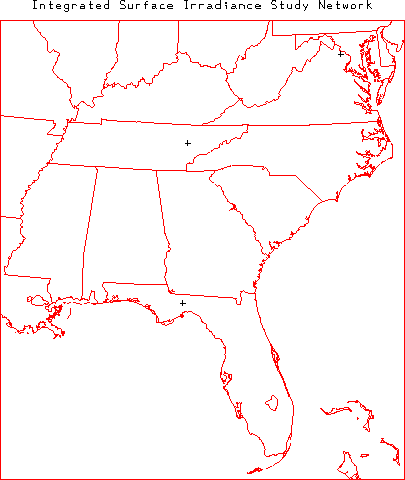
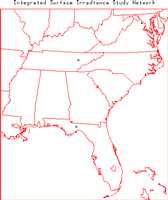
| Integrated Surface Irradiance Study (ISIS)
Network - The ISIS network is operated by the NOAA Air Resources
Laboratory (ARL) Surface Radiation Research Branch (SRRB). The network
provides 3 minute observations of downwelling global solar, direct solar,
downwelling diffuse solar and global UVB. There are 9 ISIS sites located
across the US (1 in Virginia). For further information visit the ISIS
home page at:
http://www.srrb.noaa.gov/isis/. |
 |
| |
|
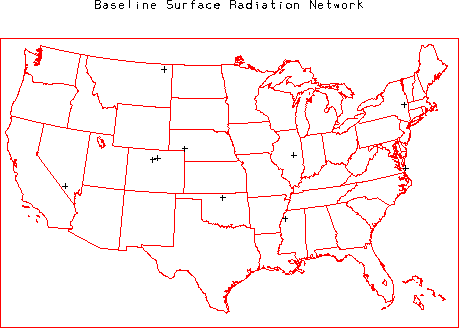
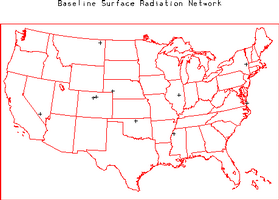
| Baseline Surface Radiation Network (BSRN) -
The BSRN is a project of the World Climate Research Programme. The primary parameters
measured by each station include global radiation, direct and diffuse radiation,
downward longwave radiation, and meteorological observations. The networks includes 12
stations within the United States (1 in Virginia). For further information visit the
BSRN home page. |
 |
| |
|
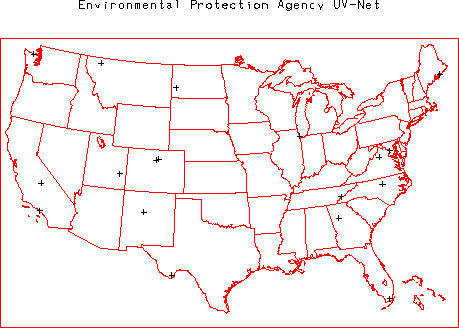
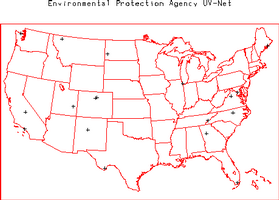
| Environmental Protection Agency (EPA) Ultraviolet
Monitoring Program (UV-Net) - The EPA operates this network of 20 Brewer
spectrophotometers throughout the US (1 in Virginia). The network provides observations of
full-sky spectrally resolved solar radiation in the UV-B and UV-A bands. The
irradiance and total column ozone concentrations are derived from these data.
For further information visit the
EPA UV-Net page. |
 |
| |
|
| Soil Networks |
| |
|
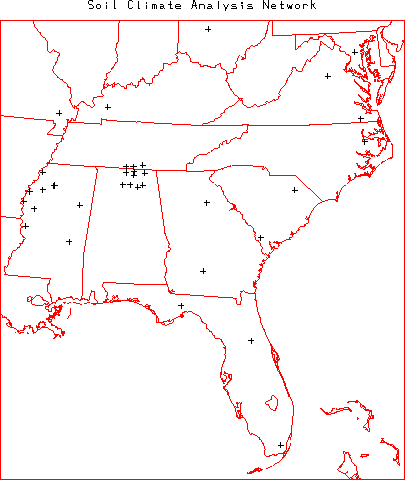
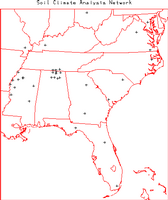
| Soil Climate Analysis Network (SCAN) - The SCAN is operated by the United
States Department of Agriculture (USDA) Natural Resources Conservation Service (NRCS). The
network provides hourly observations of air temperature, relative humidity, wind speed,
wind direction, solar radiation, precipitation, barometric pressure, snow water content,
snow depth, soil temperature (at 2, 4, 8, 20, and 40 cm depths), and soil moisture (at 2, 4,
8, 20 and 40 cm depths). The 80 SCAN stations are located across the US in primarily
agricultural regions (2 in Virginia). For further information visit the
SCAN home page. |
 |
| |
|
| Hydrology Networks |
| |
|
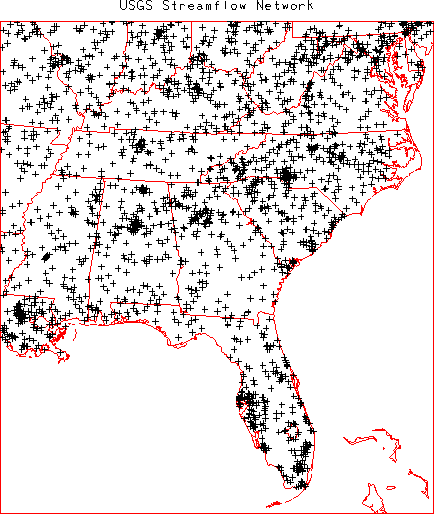
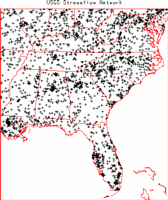
| United States Geological Survey (USGS) Streamflow
Network - The USGS (part of the US Department of the Interior) operates this
network of 7237 streamflow gages (126 in Virginia) at locations throughout the US.
The network provides hourly or more frequent observations of stage (water level) from
which discharge (flow) is comuputed using a stage-discharge rating relation. The
rating is defined by occasional direct current-meter measurements of discharge. All
data are available through the USGS and the district offices in each state. Many of
these gages provide realtime data
relayed via the GOES satellite data collection system. The realtime data are
provisional data that have not been reviewed or edited. These realtime data
may be subject to significant change and are not citeable until reviewed and approved
by the USGS. Realtime data may be changed after review because the stage-discharge
relationship may have been affected by: 1) backwater from ice or debris; 2) algal and
aquatic growth in the stream; 3) sediment movement; and 4) malfunction of recording
equipment. Each station record is considered provisional until the data are
published. The data are usually published with 6 months of the end of the water year
(1 October to 30 September). Data users are cautioned to consider carefully the
provisional nature of the information before using it. For further information on the
USGS stremflow network visit the
USGS Water Resources of the United
States page or the
USGS Virginia District Office
home page. |
 |
| |
|
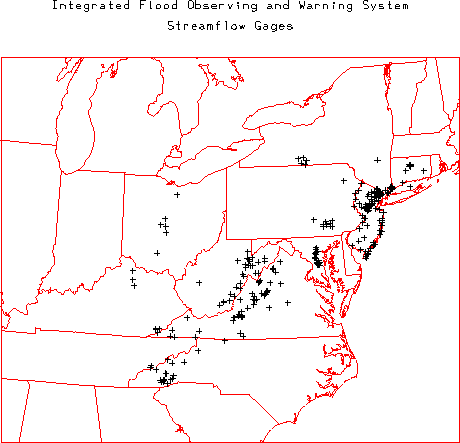
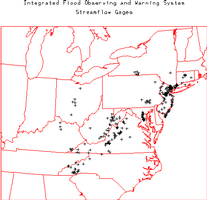
| Integrated FLood Observing and Warning System
(IFLOWS) Streamflow Network - The IFLOWS network is a collection of various
state operated Automated Flood Warning System (AFWS) networks throughout the mid-Atlantic
and northeastern portions of the United States. The network is comprised of 275
streamflow gages that provide 15-min stage observations (48 in Virginia). For
further information visit the
AFWS home page. |
 |
| |
|
| Upper Air Networks |
| |
|
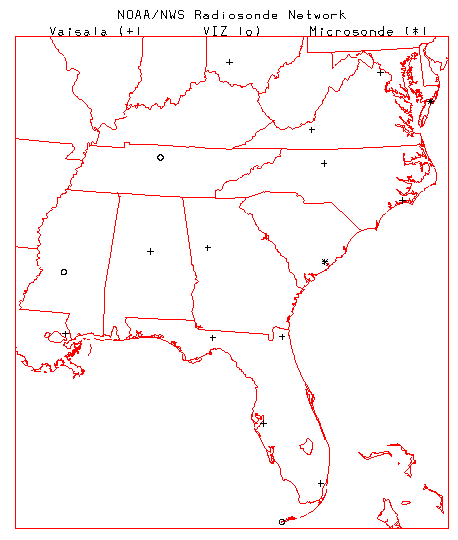
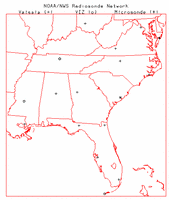
| NOAA/NWS Radiosonde Network Low Vertical Resolution Data - The NOAA/NWS
typically releases radiosondes twice per day at 0000 and 1200 UTC at 69 locations throughout
the US (2 in Virginia). During special weather situations the NWS can request to release
additional radiosondes at off-times (e.g. 1800 UTC). The low resolution data is sent out
over the Global Telecommunications System (GTS) and provides mandatory and significant level
observations of pressure, altitude, temperature, dew point, wind speed, and wind direction.
There are 3 types of radiosondes utilized within the US network, Vaisala, VIZ (or Sippican),
and Microsonde. These data are archived by NOAA/NCDC and other organizations. For further
information on the NWS Radiosonde network visit the
NWS Upper-air Observations Program
home page. A several year archive of GTS upper air data is available at the
NOAA/FSL Radiosonde Database. |
 |
| |
|
| NOAA/NWS Radiosonde Network High Vertical Resolution Data - The same
radiosonde locations mentioned in the previous data set also provide a 6-second vertical
resolution data set that provides observations of pressure, temperature, altitude,
relative humidity, and azimuth and elevation angles. UCAR/JOSS has developed software
to derive 6-second vertical resolution winds from the angle data. These data are
archived by NCDC and UCAR/JOSS. |
|
| |
|
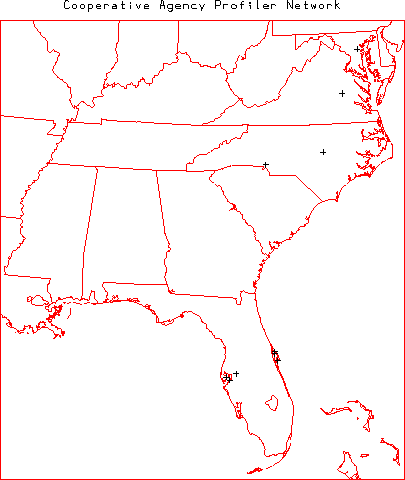
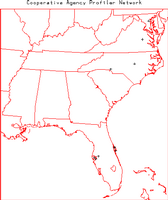
| Cooperative Agency Profiler (CAP) Network - The NOAA/FSL ingests data
from wind profilers and RASS operated by a number of cooperating agencies. Most of
these profilers are 915 MHz, but some are 449 or 50 MHz. Most provide hourly observations
of wind speed and direction. The number and location of these can vary through time. As
this is being written the network included 58 locations within the US (1 in Virginia).
Most of the sites are along the US West Coast and in the northeastern US. For further
information visit the CAP home page at:
http://www.profiler.noaa.gov/jsp/aboutCap.jsp. |
 |
| |
|
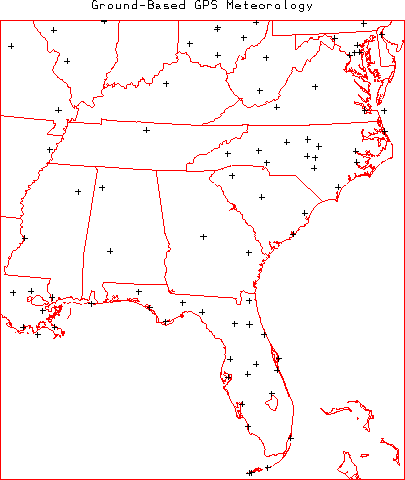
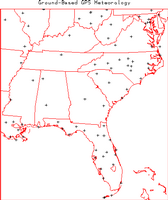
| Ground Based Global Positioning System (GPS)
Meteorology Demonstration Network (GPS-MET) - The NOAA/FSL ingests data
from 323 GPS locations around the US operated by many different agencies (6 in
Virginia). Typically each location provides 30-minute observations of integrated
precipitatable water along with a number of surface meteorology parameters (air
temperature, relative humidity, barometric pressure, etc). For further information
visit the
GPS-MET home page. |
 |
| |
|
| Aerosol Networks |
| |
|
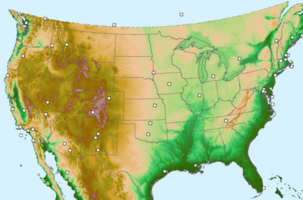
| Aerosol Robotic Network (AERONET) - AERONET is an optical ground-based aerosol
monitoring network and data archive supported by NASA's Earth Observing System. The network
hardware consists of identical automatic sun-sky scanning spectral radiometers owned by national
agencies and universities. Data from this collaboration provides globally distributed (2 in Virginia)
near real time observations of aerosol spectral optical depths, aerosol size distributions and precipitable
water. For further information visit the
AERONET home page. |
 |
| |
|
| Regional East Atmospheric Lidar Mesonet - The Regional East Atmospheric Lidar Mesonet
(REALM) is a proposal by a number of lidar researchers and is designed to monitor air quality in the
vertical from multiple locations on the east coast. For further information visit the
REALM web site. |
Map at web site. |
| |
|
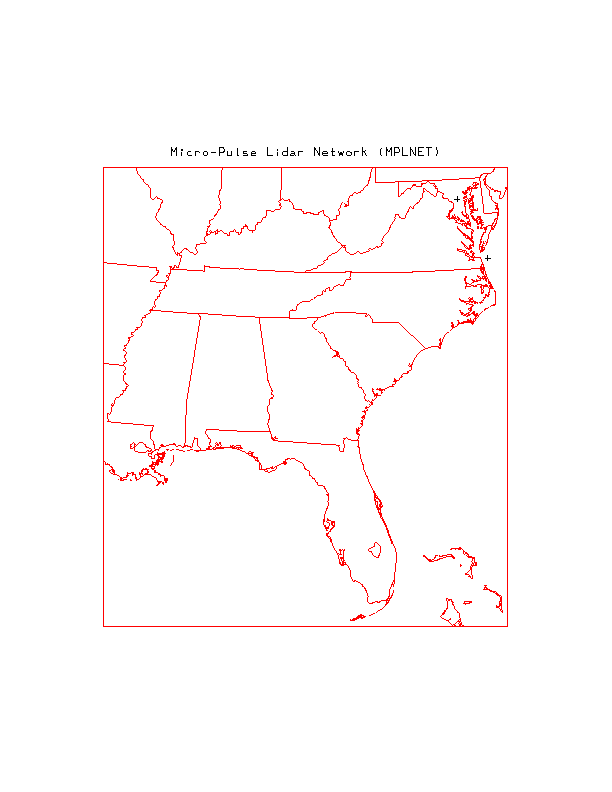
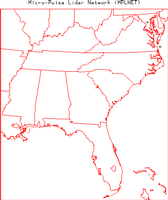
| Micro-Pulse Lidar Network (MPLNET) - MPLNET is comprised of ground-based lidar systems
that are co-located with sun/sky photometer sites in the NASA AERONET. Basic data from the MPL include
aerosol and cloud layer heights. The primary purpose of MPLNET is to acquire long-term observations of
aerosol and cloud vertical structure at sites around the world (1 in Virginia). For further information
visit the MPLNET home page. |
 |
| |
|
| Coastal Networks |
| |
|
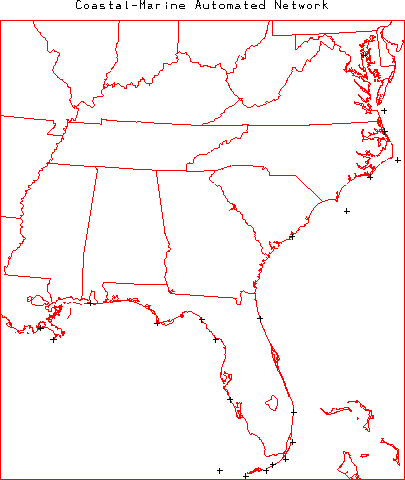
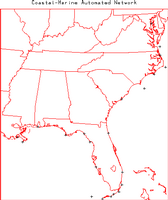
| Coastal-Marine Automated Network (C-MAN) -
The National Data Buoy Center (NDBC) operates this network of 55 C-MAN stations
with locations along coastlines throughout the US (1 in Virginia). The network
typically provides hourly observations of air temperature, barometric pressure,
wind speed, wind direction, and wind gust. Some stations also provide
observations of sea water temperature, water level, waves, relative humidity,
precipitation, and visibility. For further information visit the
NDBC home page. |
 |
| |
|
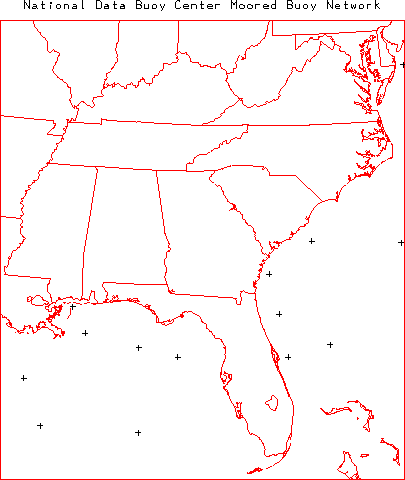
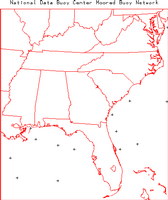
| National Data Buoy Center (NDBC) Moored Buoy
Network - The NDBC operates this network of 77 moored buoys with locations
throughout the US coastal regions (1 off the coast of Virginia). The network typically
provides hourly observations of air temperature, dew point, water temperature,
barometric pressure, wind speed, wind direction, wave height, wave period, and
swell. For further information visit the
NDBC home page. |
 |
| |
|
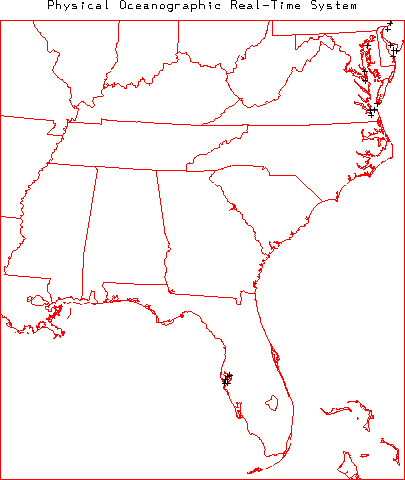
| Physical Oceanographic Real-Time System (PORTS)
- The National Ocean Service (NOS) operates this network of 51 weather stations with
locations within bays and harbors along the Atlantic and Gulf of Mexico coastlines
(5 in Virginia). The network provides 15-minute observations of air temperature,
wind speed, wind direction, barometric pressure, water temperature, and water level.
For further information visit the
PORTS home page
. |
 |