| |
Click on the maps for larger image |
| |
|
| The information below is NOT presently for Hawaii. Please check back later. |
| National Surface Meteorological Networks |
| |
|
| Automated Surface Observing System (ASOS) - The National Weather Service (NWS),
Federal Aviation Administration (FAA) and Department of Defense operate this network of 967
stations located throughout the United States (22 in Oregon). The data generally available
from ASOS stations includes hourly (and special) observations of air temperature, dew point, wind
speed, wind direction, cloud cover, visibility, present weather, and precipitation. Via modem
data can be obtained every minute (typically the most recent ~8 hours of observations are kept at
the stations). For further information on the ASOS network visit the
NWS ASOS home page or the
FAA Automated Sensors home page. |
 |
| |
|
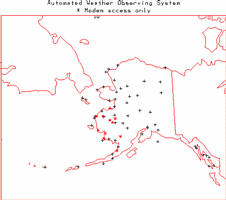
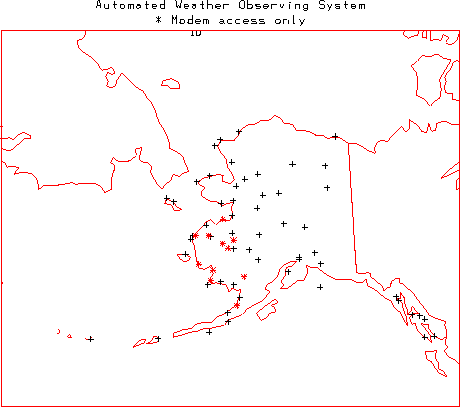
| Automated Weather Observing System (AWOS) - The FAA and various state agencies
(particularly Aviation Divisions of state Departments of Transportation) operate this network of
900 stations located throughout the United States (3 in Hawaii). While data is generally
available from 552 of these stations (none in Hawaii), the data from the other 348 stations (3 in Hawaii) is
currently only available via dialup modem (typically the most recent ~3 weeks of observations
are kept at the stations). These stations typically provide 20-minute observations of air
temperature, dew point, wind speed, wind direction, cloud cover, visibility, altimeter setting,
present weather and precipitation. For further information on the AWOS network visit the
FAA Automated Sensors home page. |
 |
| |
|
| Non-Automated METAR Reports - In addition to the ASOS and AWOS there are still
a number of stations where the observations are taken manually. There are 240 such observation
locations located throughout the United States (3 in Oregon). A large proportion of these
observations are limited in some fashion (e.g. no observations at night or just one or two
observations in a day). The parameters available vary from station to station, but most provide
air temperature, dew point, wind speed, wind direction, cloud cover, and present weather. |
 |
| |
|
| NOAA/NWS Cooperative Observer Program - The National Oceanographic and
Atmospheric Administration (NOAA) National Weather Service (NWS) oversees this network with
9765 participating cooperative observers located throughout the United States (378 in
Oregon). This network provides daily observations (7am local time) of maximum and minimum
air temperature, precipitation, snowfall, and snow depth. Some stations also provide soil
temperature, evaporation, and wind run. These data are archived at NOAA/NCDC. For further
information visit the NOAA/NWS Cooperative Observer Program home page at:
http://www.nws.noaa.gov/om/coop/index.htm. |
 |
| |
|
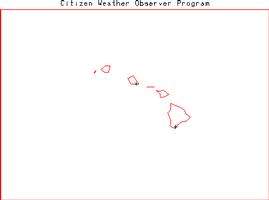
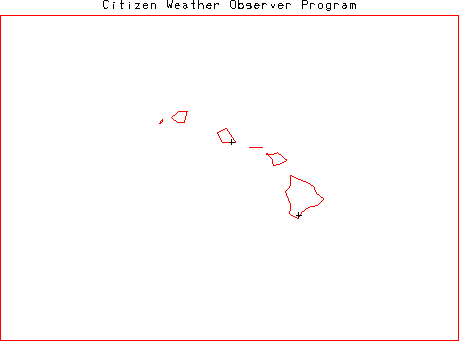
| Citizen Weather Observer Program (CWOP)
- This 'network' is comprised of weather stations operated by the general public and
reported by amateur radio operators around the world. All observations are collected
by the NOAA/Forecast Systems Laboratory (NOAA/FSL) and are included as part of their
Meteorological Assimilation Data Ingest System (MADIS). The network varies greatly in
terms of data quality and completeness. Within the United States there are
1328 reporting stations (2 in Hawaii). The parameters reported
vary by station, but typically include air temperature, relative humidity, wind speed,
wind direction, barometric pressure, and precipitation. For further information
visit the
CWOP home page. |
 |
| |
|
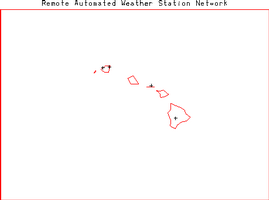
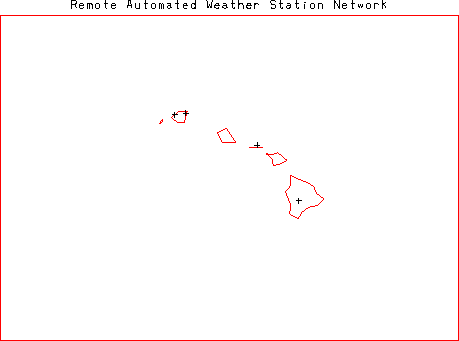
| Remote Automated Weather Station (RAWS) Network - The United States Forest
Service oversees this network of stations owned and operated by state and local wildland fire
agencies. The network typically provides hourly values of air temperature, dew point,
relative humidity, wind speed, wind direction, precipitation, fuel temperature, and fuel
moisture. The network consists of 726 stations located throughout the United States (4 in
Hawaii), but heavily concentrated in the forested areas of the western mountains. These
data are included within the University of Utah
MesoWest and the NOAA/FSL
MADIS data sets.
For further information visit the
USFS RAWS home page. |
 |
| |
|
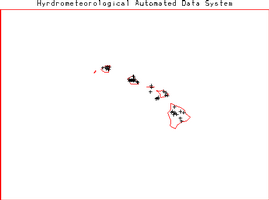
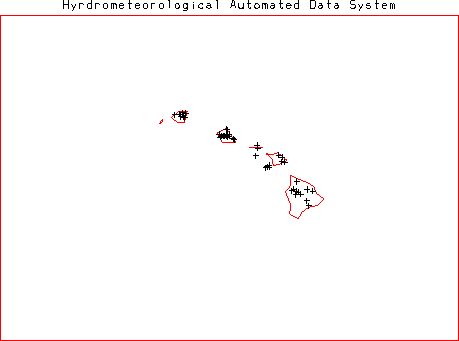
| Hydrometeorological Automated Data System (HADS) - The NOAA Office of
Hydrologic Development operates the HADS real-time data aquisition and data distribution
system. HADS collects data from Data Collection Platforms (DCPs) operated by a number of
federal, state, and local agencies throughout the US and a few nearby countries. The
network currently includes 10079 observation locations (47 in Hawaii). The temporal
resolution and parameters collected vary widely by network and station but can include a
variety of meteorological and hydrologic parameters. For further information visit the
NWS HADS page. |
 |
| |
|
| Long Term Ecological Research (LTER) Network - The LTER network
was set up by the National Science Foundation to allow investigation of ecological
processes at long time scales and over broad spatial scales. Each of the 19 (1 in
Oregon) LTER sites typically has at least one automated surface meteorological station.
Many also have several meteorological stations, precipitation networks, and/or flux
towers. The LTER site in Oregon is the H. J. Andrews Experimental Forest LTER in the
central Cascade Range of western Oregon. For further information visit the LTER home page at:
http://lternet.edu/ or the
H. J. Andrews Experimental Forest LTER home page at:
http://www.fsl.orst.edu/lter/. |
 |
| |
|
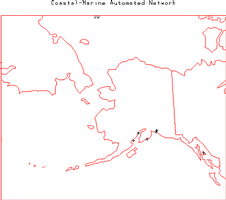
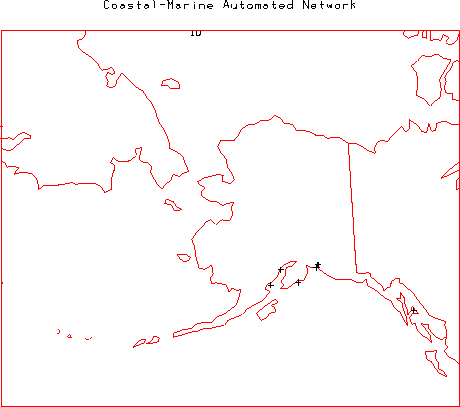
| Coastal-Marine Automated Network (C-MAN) -
The National Data Buoy Center (NDBC) operates this network of 55 C-MAN stations
with locations along coastlines throughout the US (7 in Alaska). The network
typically provides hourly observations of air temperature, barometric pressure,
wind speed, wind direction, and wind gust. Some stations also provide
observations of sea water temperature, water level, waves, relative humidity,
precipitation, and visibility. For further information visit the
NDBC home page. |
 |
| |
|
| National Data Buoy Center (NDBC) Moored Buoy
Network - The NDBC operates this network of 77 moored buoys with locations
throughout the US coastal regions (3 off the coast of Oregon). The network typically
provides hourly observations of air temperature, dew point, water temperature,
barometric pressure, wind speed, wind direction, wave height, wave period, and
swell. For further information visit the
NDBC home page. |
 |
| |
|
| Regional Surface Meteorological Networks |
| |
|
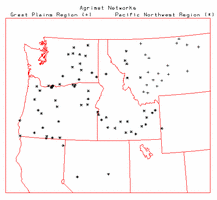
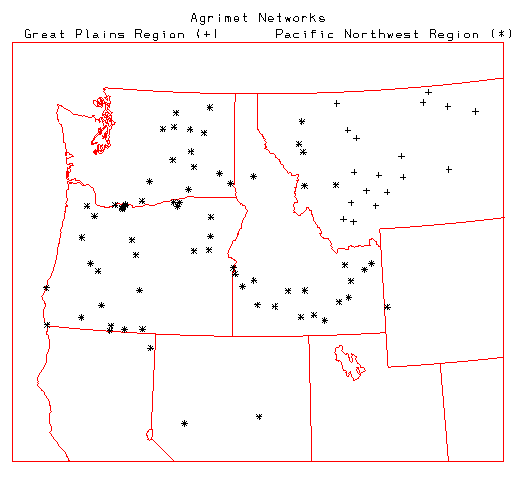
| United States Bureau of Reclamation (USBR) Agricultural Weather Networks
(AgriMet) - There are two networks included here with similar data collection
efforts. The USBR Great Plains Region operates the Great Plains Cooperative Agricultural
Weather Network that consists of 20 stations located in central and western Montana. The
USBR Pacific Northwest Region operates the Pacific Northwest Cooperative Agricultural
Weather Network that consists of 69 stations located throughout the Pacific Northwest
(primarily Washington, Oregon and Idaho) (28 in Oregon). Both networks provide up to
15-minute observations of air temperature, dew point, relative humidity, precipitation,
solar radiation, wind speed, wind direction and wind gust. Other parameters collected at
some stations include soil temperature (at 1, 2, 4, 8, 20 and/or 40 inch depths),
barometric pressure, leaf wetness, and diffuse solar radiation. This network is included
as part of the University of Utah
MesoWest and NOAA/FSL
MADIS data sets. For further
information visit the
USBR Great
Plains Region AgriMet home page or the
USBR Pacific Northwest
Region AgriMet home page. |
 . . |
| |
|
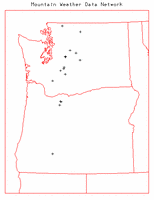
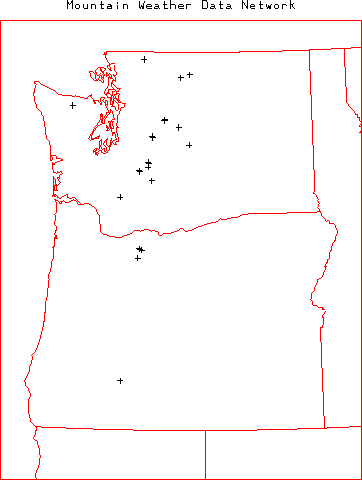
| Mountain Weather Data Network - The Northwest Weather and Avalanche
Center operates this network of 17 stations located in mountainous areas of Washington
and Oregon. The network provides hourly observations of air temperature, relative
humidity, wind speed, wind direction, precipitation, and snowfall. This network is
included within the University of Utah
MesoWest and the NOAA/FSL
MADIS. For further
information visit the Mountain Weather Data Network home page at:
http://www.nwac.noaa.gov/nw05000.htm#Hourly%20Mountain%20Weather%20Data. |
 . . |
| |
|
| State and Local Surface Meteorological Networks |
| |
|
| Hawaii Air Quality Monitoring Network - The Hawaii Department of Health operates
this network of 18 air quality monitoring stations throughout the state. It is unknown how many
of these provide meteorological measurements. For further information visit the
Hawaii Environmental
Health home page. |
Maps on web page. |
| |
|
| KHNL WeatherNet
- KHNL-TV in Honolulu, Hawaii operates this network of 41 stations located
primarily at schools throughout Hawaii. The
network provides up to 1-minute observations of air temperature, relative
humidity, wind speed, wind direction, precipitation, and barometric pressure.
For further information visit the
KHNL network page. |
No map yet. |
| |
|
| Precipitation and Radar Networks |
| |
|
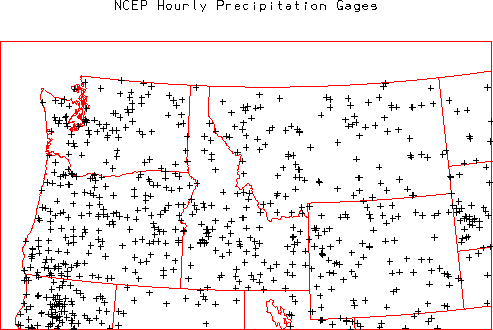
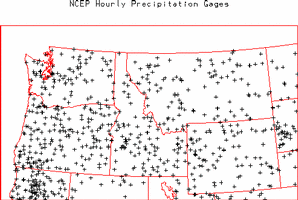
| NOAA/National Centers for Environmental
Prediction (NCEP) Hourly Precipitation Data - NOAA/NCEP routinely develops
a National Multi-sensor Hourly Precipitation Analysis (Stage II) data set from
hourly radar precipitation estimates and from hourly gage reports. The gage data
includes hourly observations from ~4000 gages across the US (179 in Oregon)
collected by the NOAA River Forecast Centers and sent to NCEP. Further information
on these data is available at:
http://wwwt.emc.ncep.noaa.gov/mmb/ylin/pcpanl/. |
 |
| |
|
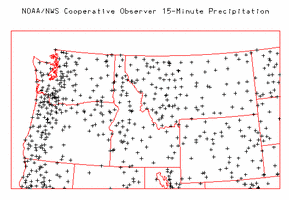
| NOAA/NWS Cooperative Observer 15-minute Precipitation Network - The
NOAA/NWS
routinely collects 15-minute observations of precipitation from Fisher-Porter and Universal
rain gages operated by 2777 cooperative observers located throughout the US (117 in Oregon).
These data are archived at NOAA/National Climatic Data Center (NCDC) as data set TD 3260.
For further information visit the NOAA/NCDC TD3260 page at:
http://ols.nndc.noaa.gov/plolstore/plsql/olstore.prodspecific?prodnum=C00505-TAP-A0001 |
 |
| |
|
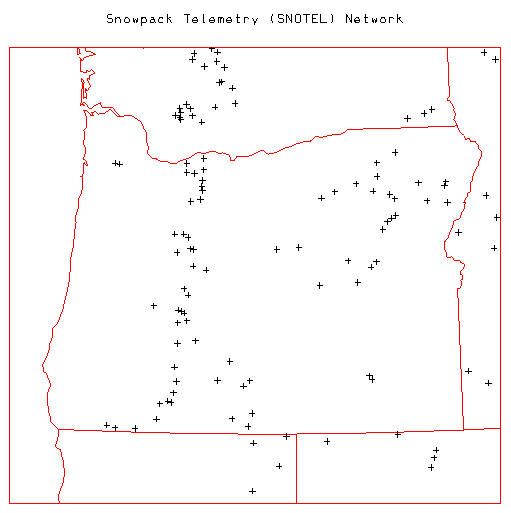
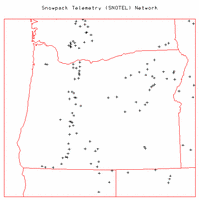
| Snowpack Telemetry (SNOTEL) Network - The United States Department of
Agriculture Natural Resources Conservation Service (NRCS) operates this network of 754
stations with locations throughout the mountainous areas of the western US (74 in
Oregon). The temporal resolution and parameters measured vary by station. Up to hourly
observations of air temperature, precipitation, snow depth, and snow water content are
typically provided. Other parameters that may be available include relative humidity, wind
speed, wind direction, solar radiation, soil moisture, and soil temperature. These data
are archived by the NRCS, Western Regional Climate Center, and other. For further
information visit the NRCS National Water and Climate Center SNOTEL page at:
http://www.wcc.nrcs.usda.gov/water/w_data.html. |
 |
| |
|
| City of Portland Bureau of Environmental Services HYDRA Rainfall Network
- The City of Portland, Oregon operates this network of 39 rain gages located throughout
the Portland area. The network provides hourly observations of precipitation. For further
information including a map of locations visit the City of Portland HYDRA home page at:
http://oregon.usgs.gov/non-usgs/bes/. |
Map at web site |
| |
|
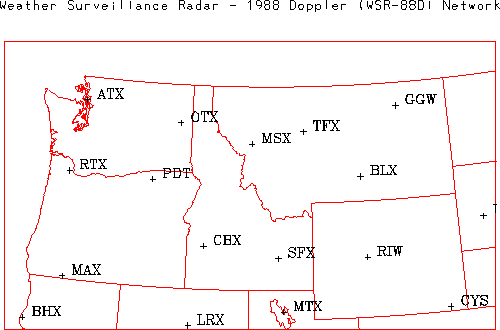
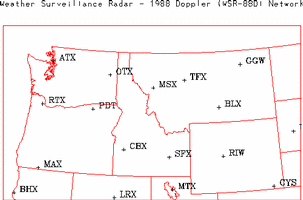
| Weather Surveillance Radar 1988 Doppler (WSR-88D)
Network - The NOAA/NWS and the Department of Defense operate this network
of 143 WSR-88D radars across the contiguous US (3 in Oregon). The Level II
data are the three meteorological base data quantities (reflectivity, mean radial
velocity, and spectrum width) and are recorded at all NWS and most DOD sites.
Level II data are then processed in order to create a number of meteorological analysis
products known as Level III data. Level III data are recorded at the NWS sites. The
Level III products included base reflectivity, base spectrum width, base velocity,
composite reflectivity, echo tops, velocity azimuth display (VAD) wind profile,
vertically integrated liquid (VIL), 1-hour precipitation, storm total precipitation,
hail index overlay, mesocyclone overlay, severe weather probability overlay, storm
structure, storm tracking information overlay, and tornadic vortex signature overlay.
All Level II and III data are archived at NOAA/NCDC. For further information visit
the NOAA/NCDC Radar Resources page at:
http://www.ncdc.noaa.gov/oa/radar/radarresources.html or the NOAA Radar
Operations Center at:
http://www.roc.noaa.gov/. |
 |
| |
|
| Radiation and Flux Networks |
| |
|
| Ameriflux Network - The Ameriflux network consists of 50 sites conducting
long-term measurements of CO2, water and energy fluxes throughout the US (2 in Oregon).
The typical observational frequency is 30 minutes. The parameters measured at each site
vary, but Ameriflux has defined a core set of parameters that most sites collect, including
fluxes of CO2, energy and water, basic meteorological and radiation parameters, and soil
temperature and moisture. For further information visit the Ameriflux home page at:
http://public.ornl.gov/ameriflux/Participants/Sites/Map/index.cfm. |
 |
| |
|
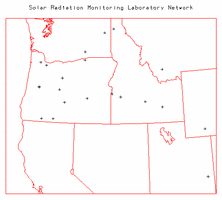
| University of Oregon Solar Radiation Monitoring Laboratory Network -
The University of Oregon Solar Radiation Monitoring Laboratory Network consists of 21
stations located throughout Oregon and nearby states (11 in Oregon). The parameters
measured vary by station but typically provide up to 5-minute observations of global,
direct and diffuse solar along with some meteorological parameters. For further
information visit the SRML Network home page at:
http://solardat.uoregon.edu/
|
 |
| |
|
| Soil Networks |
| |
|
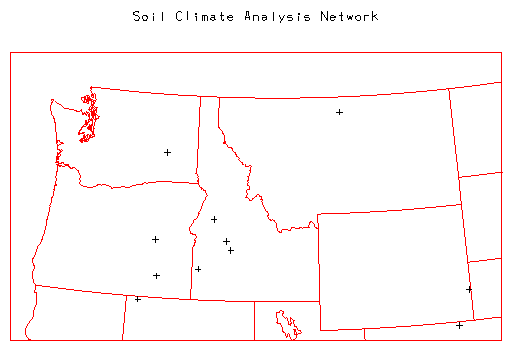
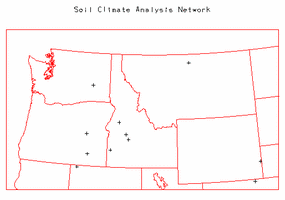
| Soil Climate Analysis Network (SCAN) - The SCAN is operated by the United
States Department of Agriculture (USDA) Natural Resources Conservation Service (NRCS). The
network provides hourly observations of air temperature, relative humidity, wind speed,
wind direction, solar radiation, precipitation, barometric pressure, snow water content,
snow depth, soil temperature (at 2, 4, 8, 20, and 40 cm depths), and soil moisture (at 2, 4,
8, 20 and 40 cm depths). The 67 SCAN stations are located across the US in primarily
agricultural regions (2 in Oregon). For further information visit the SCAN home page at:
http://www.wcc.nrcs.usda.gov/scan/. |
 |
| |
|
| Hydrology Networks |
| |
|
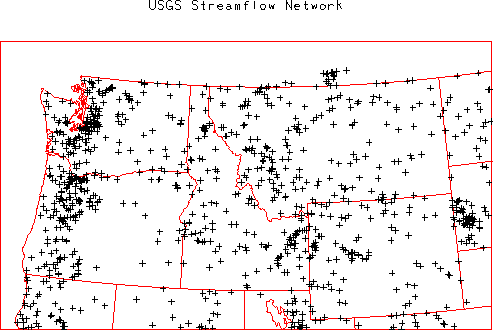
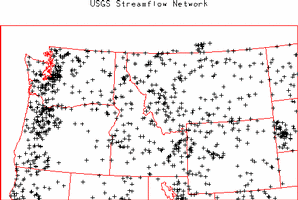
| United States Geological Survey (USGS) Streamflow
Network - The USGS (part of the US Department of the Interior) operates this
network of 7237 streamflow gages (180 in Oregon) at locations throughout the US.
The network provides hourly or more frequent observations of stage (water level) from
which discharge (flow) is computed using a stage-discharge rating relation. The
rating is defined by occasional direct current-meter measurements of discharge. All
data are available through the USGS and the district offices in each state. Many of
these gages provide realtime data
relayed via the GOES satellite data collection system. The realtime data are
provisional data that have not been reviewed or edited. These realtime data
may be subject to significant change and are not citeable until reviewed and approved
by the USGS. Realtime data may be changed after review because the stage-discharge
relationship may have been affected by: 1) backwater from ice or debris; 2) algal and
aquatic growth in the stream; 3) sediment movement; and 4) malfunction of recording
equipment. Each station record is considered provisional until the data are
published. The data are usually published with 6 months of the end of the water year
(1 October to 30 September). Data users are cautioned to consider carefully the
provisional nature of the information before using it. For further information on the
USGS streamflow network visit the USGS Water Resources of the United States page at:
http://water.usgs.gov/ or the
USGS Oregon District Office home page at:
http://or.water.usgs.gov/. |
 |
| |
|
| Upper Air Networks |
| |
|
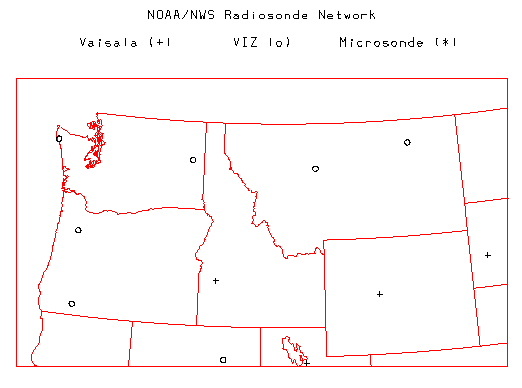
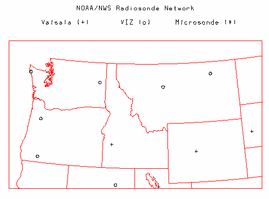
| NOAA/NWS Radiosonde Network Low Vertical Resolution Data - The NOAA/NWS
typically releases radiosondes twice per day at 0000 and 1200 UTC at 69 locations throughout
the US (2 in Oregon). During special weather situations the NWS can request to release
additional radiosondes at off-times (e.g. 1800 UTC). The low resolution data is sent out
over the Global Telecommunications System (GTS) and provides mandatory and significant level
observations of pressure, altitude, temperature, dew point, wind speed, and wind direction.
There are 3 types of radiosondes utilized within the US network, Vaisala, VIZ (or Sippican),
and Microsonde. These data are archived by NOAA/NCDC and other organizations. For further
information on the NWS Radiosonde network visit the NWS radiosonde network home page at:
http://www.ua.nws.noaa.gov. |
 |
| |
|
| NOAA/NWS Radiosonde Network High Vertical Resolution Data - The same
radiosonde locations mentioned in the previous data set also provide a 6-second vertical
resolution data set that provides observations of pressure, temperature, altitude,
relative humidity, and azimuth and elevation angles. UCAR/JOSS has developed software
to derive 6-second vertical resolution winds from the angle data. These data are
archived by NCDC and UCAR/JOSS. |
|
| |
|
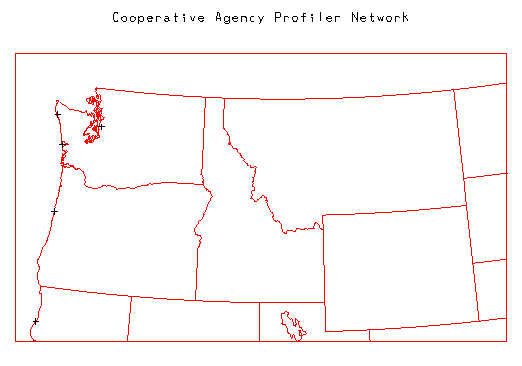
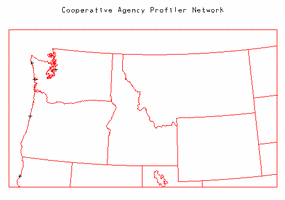
| Cooperative Agency Profiler (CAP) Network - The NOAA/FSL ingests data
from wind profilers and RASS operated by a number of cooperating agencies. Most of
these profilers are 915 MHz, but some are 449 or 50 MHz. Most provide hourly observations
of wind speed and direction. The number and location of these can vary through time. As
this is being written the network included 58 locations within the US (1 in Oregon).
Most of the sites are along the US West Coast and in the northeastern US. For further
information visit the CAP home page at:
http://www.profiler.noaa.gov/jsp/aboutCap.jsp. |
 |
| |
|
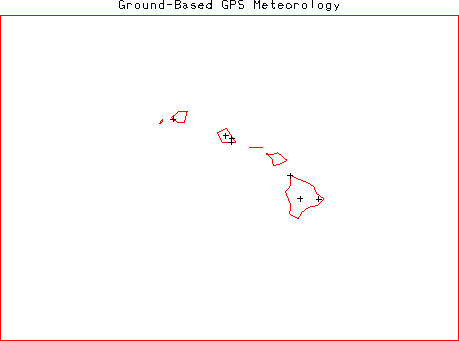
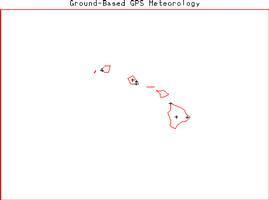
| Ground Based Global Positioning System (GPS) Meteorology Demonstration Network
(GPS-MET) - The NOAA/FSL ingests data from 323 GPS locations around the US
operated by many different agencies (7 in Hawaii). Typically each location provides
30-minute observations of integrated precipitatable water along with a number of surface
meteorology parameters (air temperature, relative humidity, barometric pressure, etc).
For further information visit the
GPS-MET home page. |
 |





 .
. .
.