| |
Click on the maps for larger image |
| |
|
| Regional Surface Meteorological Networks |
| |
|
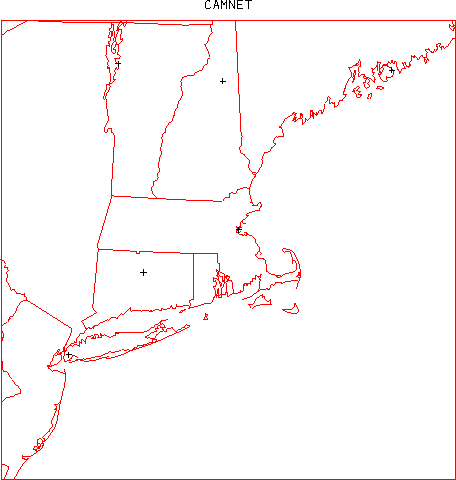
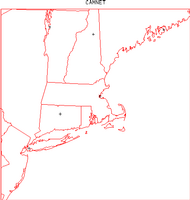
| CAMNET - The Northeast States
for Coordinated Air Use Management (NESCAUM) operates this network of 6 stations
with locations throughout the northeast US (1 in Connecticut). The network
provides 15-minute observations of air temperature, relative humidity, wind
speed, wind direction, precipitation, and visibility. Each station also has a
webcam on site. For further information visit the
CAMNET home page. |
 |
| |
|
| WNBC WeatherNet
- WNBC-TV in New York, New York this network of 485 stations located
primarily at schools throughout New York, New Jersey and Connecticut (28 in New York). The
network provides up to 1-minute observations of air temperature, relative
humidity, wind speed, wind direction, precipitation, and barometric pressure.
For further information visit the
WNBC network page. |
No map yet. |
| |
|
| State and Local Surface Meteorological Networks |
| |
|
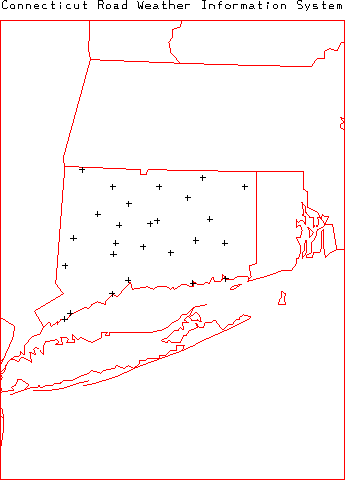
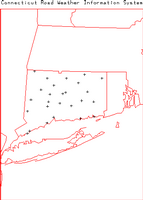
| Connecticut Department of Transportation (DOT)
Road Weather Information System (RWIS) Network - The Connecticut DOT operates
this network of 26 stations with locations along roadways throughout the state of
Connecticut. The network provides variable (hourly or higher) resolution observations
of air temperature, dew point, relative humidity, and wind speed. For further information
visit the
Connecticut DOT weather roundup page. |
 |
| WTNH WeatherNet
- WTNH-TV in Hartford, Connecticut operates this network of 19 stations located
primarily at schools throughout Connecticut. The
network provides up to 1-minute observations of air temperature, relative
humidity, wind speed, wind direction, precipitation, and barometric pressure.
For further information visit the
WTNH network page. |
No map yet. |
| |
|
| Precipitation and Radar Networks |
| |
|
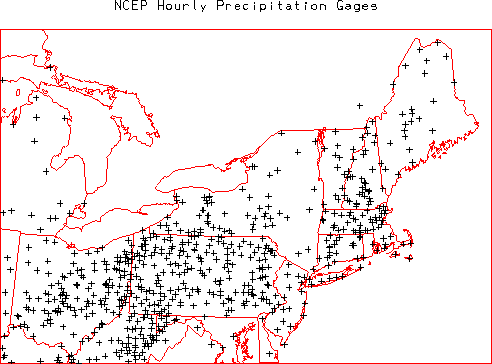
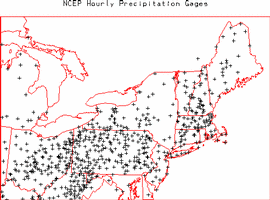
| NOAA/National Centers for Environmental
Prediction (NCEP) Hourly Precipitation Data - NOAA/NCEP routinely develops
a National Multi-sensor Hourly Precipitation Analysis (Stage II) data set from
hourly radar precipitation estimates and from hourly gage reports. The gage data
includes hourly observations from ~4000 gages across the US (20 in Connecticut)
collected by the NOAA River Forecast Centers and sent to NCEP. Further information
on these data is available at:
http://wwwt.emc.ncep.noaa.gov/mmb/ylin/pcpanl/. |
 |
| |
|
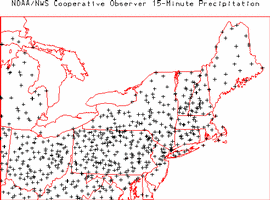
| NOAA/NWS Cooperative Observer 15-minute Precipitation Network - The NOAA/NWS
routinely collects 15-minute observations of precipitation from Fisher-Porter and Universal
rain gages operated by 2777 cooperative observers located throughout the US (16 in Connecticut).
These data are archived at NOAA/NCDC as data set TD 3260. For further information visit the
NOAA/NCDC TD3260 page. |
 |
| |
|
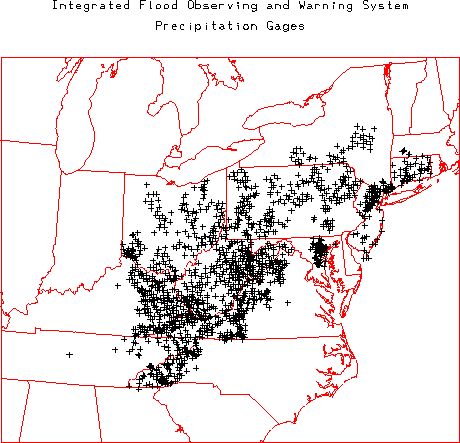
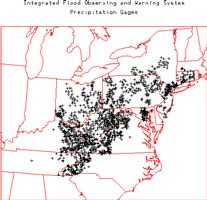
| Integrated FLood Observing and Warning System
(IFLOWS) Precipitation Network - The IFLOWS precipitation network is a collection
of various state operated Automated Flood Warning System (AFWS) networks throughout
the mid-Atlantic and northeastern portions of the United States. The network is
comprised of 1530 precipitation stations that provide 15-minute observations of
precipitation (52 in Connecticut). These precipitation data are included as part of the NCEP
Precipitation data set described above. For further information visit the
AFWS home page. |
 |
| |
|
| Radiation and Flux Networks |
| |
|
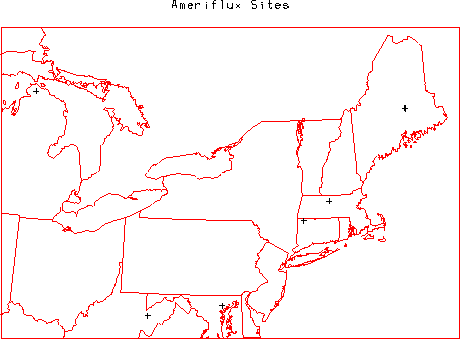
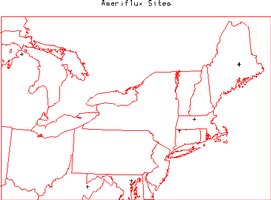
| Ameriflux Network - The Ameriflux network consists of 54 sites conducting
long-term measurements of CO2, water and energy fluxes throughout the US (1 in Connecticut).
The typical observational frequency is 30 minutes. The parameters measured at each site
vary, but Ameriflux has defined a core set of parameters that most sites collect, including
fluxes of CO2, energy and water, basic meteorological and radiation parameters, and soil
temperature and moisture. For further information visit the Ameriflux home page at:
http://public.ornl.gov/ameriflux/Participants/Sites/Map/index.cfm. |
 |
| |
|
| Soil Networks |
| |
|
| None at present |
|
| |
|
| Hydrology Networks |
| |
|
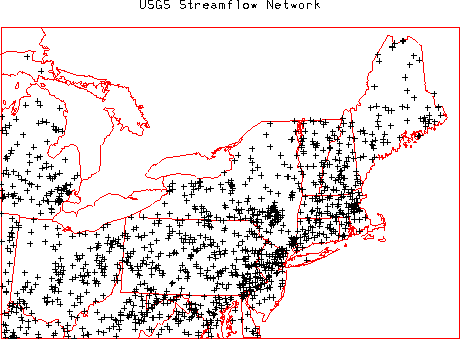
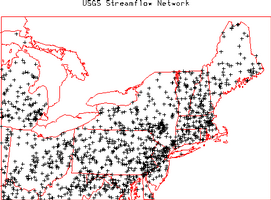
| United States Geological Survey (USGS) Streamflow
Network - The USGS (part of the US Department of the Interior) operates this
network of 7237 streamflow gages (39 in Connecticut) at locations throughout the US.
The network provides hourly or more frequent observations of stage (water level) from
which discharge (flow) is comuputed using a stage-discharge rating relation. The
rating is defined by occasional direct current-meter measurements of discharge. All
data are available through the USGS and the district offices in each state. Many of
these gages provide realtime data
relayed via the GOES satellite data collection system. The realtime data are
provisional data that have not been reviewed or edited. These realtime data
may be subject to significant change and are not citeable until reviewed and approved
by the USGS. Realtime data may be changed after review because the stage-discharge
relationship may have been affected by: 1) backwater from ice or debris; 2) algal and
aquatic growth in the stream; 3) sediment movement; and 4) malfunction of recording
equipment. Each station record is considered provisional until the data are
published. The data are usually published with 6 months of the end of the water year
(1 October to 30 September). Data users are cautioned to consider carefully the
provisional nature of the information before using it. For further information on the
USGS stremflow network visit the
USGS Water Resources of the United
States page or the
USGS Connecticut District Office
home page. |
 |
| |
|
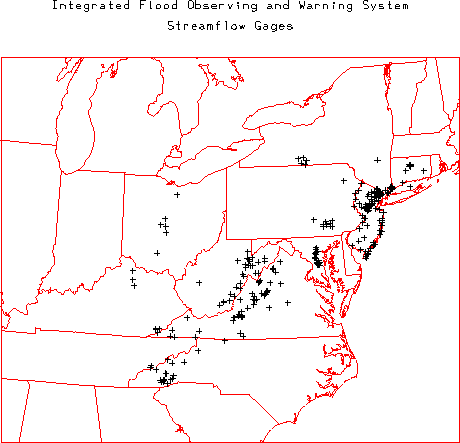
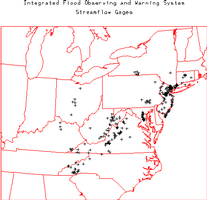
| Integrated FLood Observing and Warning System
(IFLOWS) Streamflow Network - The IFLOWS network is a collection of various
state operated Automated Flood Warning System (AFWS) networks throughout the mid-Atlantic
and northeastern portions of the United States. The network is comprised of 275
streamflow gages that provide 15-min stage observations (16 in Connecticut). For
further information visit the
AFWS home page. |
 |
| |
|
| Upper Air Networks |
| |
|
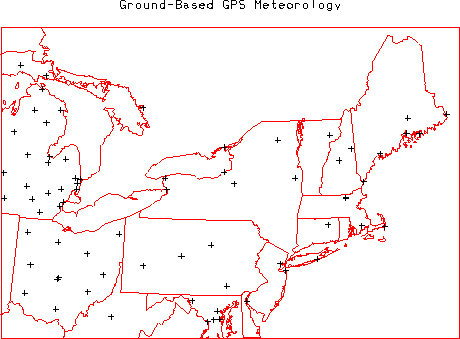
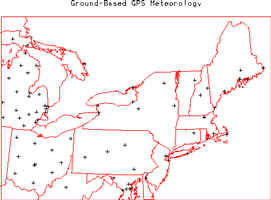
| Ground Based Global Positioning System (GPS) Meteorology Demonstration Network
(GPS-MET) - The NOAA/FSL ingests data from 323 GPS locations around the US
operated by many different agencies (1 in Connecticut). Typically each location provides
30-minute observations of integrated precipitatable water along with a number of surface
meteorology parameters (air temperature, relative humidity, barometric pressure, etc).
For further information visit the
GPS-MET home page. |
 |